
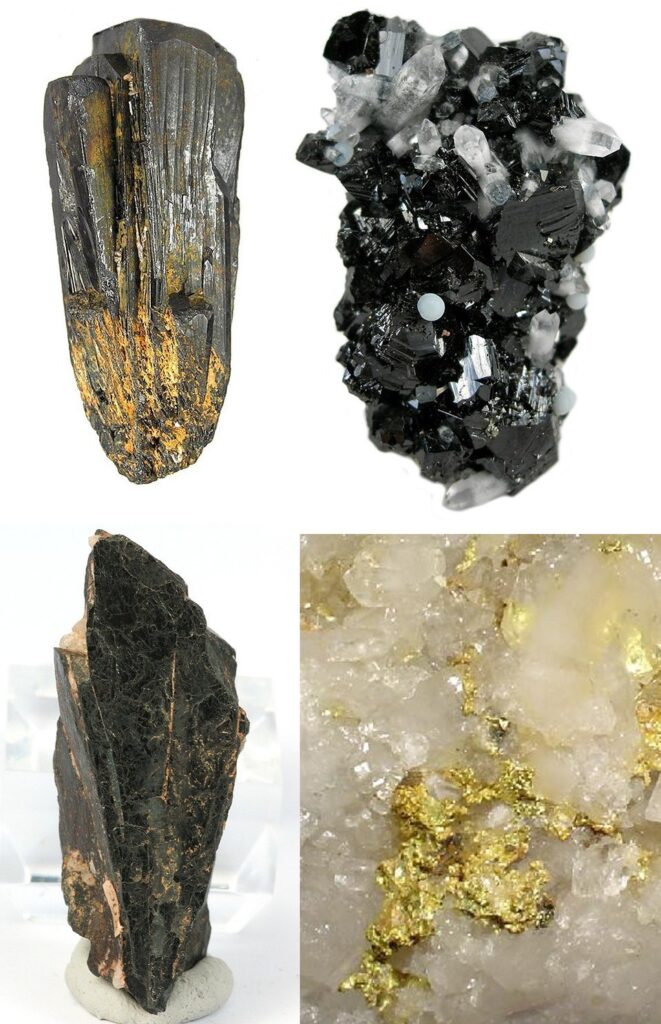
Investigation: The 3TG Supply Chain failures and Conflict Minerals in Electronics
Why it matters:
- The global electronics industry heavily relies on the 3TG minerals - tin, tungsten, tantalum, and gold - for essential components like capacitors and circuit boards.
- The concentrated production of these minerals in unstable regions like the Democratic Republic of Congo and Rwanda creates supply chain vulnerabilities and challenges in ensuring transparency and compliance with regulations.
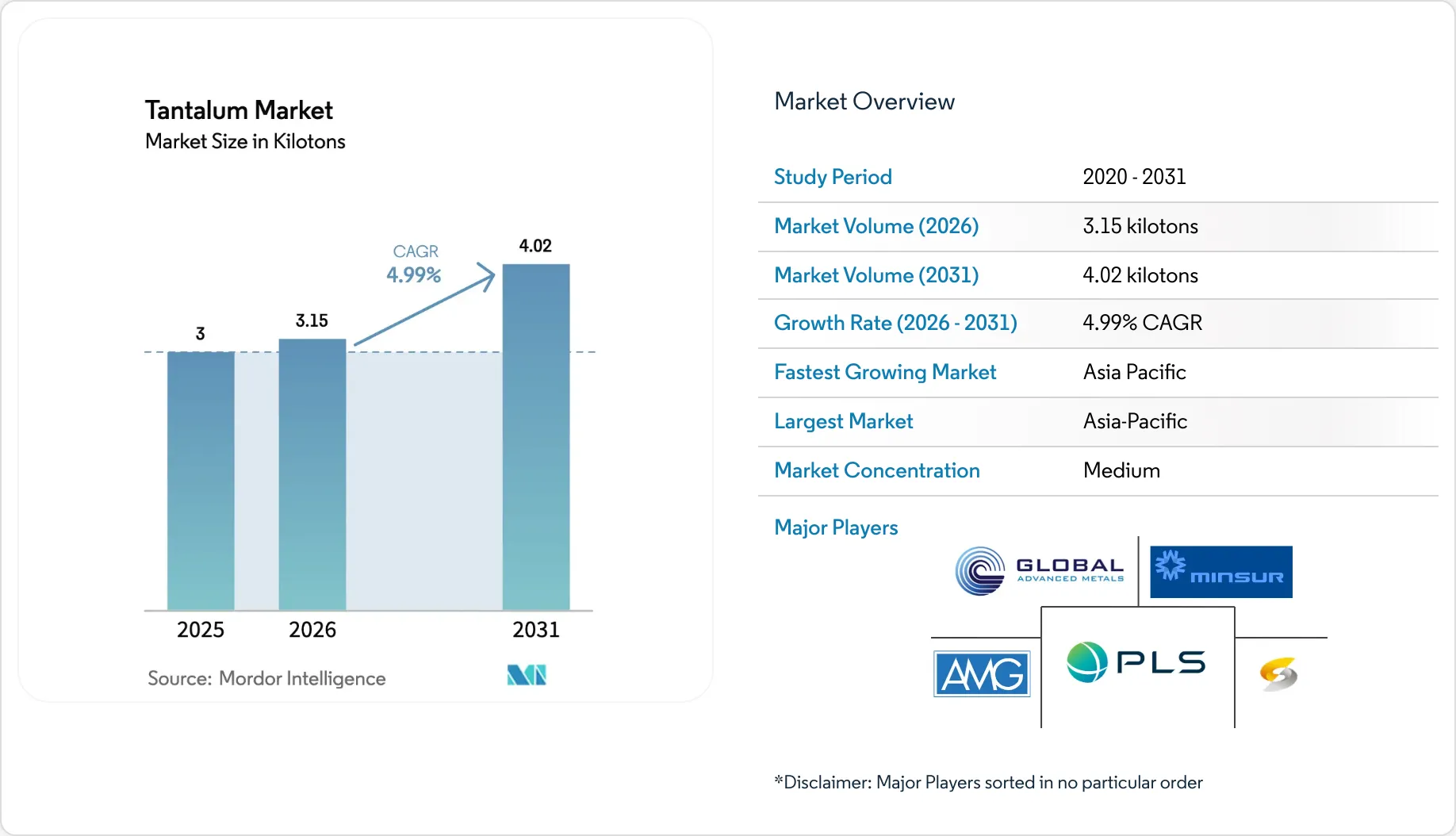
The global electronics industry relies on four essential minerals to function. Tin, tungsten, tantalum, and gold comprise the 3TG classification. These materials power capacitors, circuit boards, and microprocessors. The supply chain for these metals originates in of the most unstable regions on the planet. The Democratic Republic of Congo and Rwanda produce approximately 70 percent of the global tantalum concentrate. Global demand for these materials accelerates every year. Manufacturers consumed 2, 400 metric tons of tantalum in 2023. Analysts project tantalum demand to reach 3. 00 kilotons by the end of 2025. Capacitors alone account for 43. 65 percent of this consumption.
The numbers reveal a serious dependency on concentrated geographic zones. The United States imports 73 percent of its tin and 100 percent of its tantalum. China controls the vast majority of tungsten production and consumed a large portion of the 104, 500 metric tons demanded globally in 2018. This geographic concentration creates severe weaknesses. Smugglers move materials across borders to obscure their origins. Regulatory frameworks attempt to force transparency. The European Union enacted the Conflict Minerals Regulation on January 1, 2021. The United States relies on Section 1502 of the Dodd Frank Act. Yet these laws frequently fail to stop the flow of illicit materials into consumer devices and combat the 3TG supply chain failures.
Tantalum Demand Growth Chart
The following data illustrates the steady increase in global tantalum demand. Electronics manufacturing directly correlates with this upward trajectory.
| Year | Global Demand (Kilotons) | Visual Representation |
|---|---|---|
| 2023 | 2. 21 |
2. 21 kt
|
| 2025 | 3. 00 |
3. 00 kt
|
| 2026 | 3. 15 |
3. 15 kt
|
| 2031 (Projected) | 4. 02 |
4. 02 kt
|
The electronics sector consumes the largest share of this material. Factories use tantalum powder to manufacture capacitors. These components store and regulate electrical charges in smartphones and computers. The absence of viable substitutes forces manufacturers to rely on the existing supply chain. This dependency guarantees continued extraction in high risk regions. The data shows no reduction in demand. The market expects a 4. 99 percent compound annual growth rate between 2026 and 2031.
Supply chain managers face a mathematical impossibility. They must secure increasing volumes of raw materials while navigating strict compliance laws. The Democratic Republic of Congo remains the primary source for tantalum. Mining operations in this region frequently intersect with armed groups. The armed groups tax the miners and smuggle the ore across borders. Once the ore reaches a smelter in Asia, it mixes with clean materials. The chemical composition of the refined metal offers no clues about its origin. This physical reality renders audit reports meaningless. The numbers dictate the outcome. As long as demand rises, the financial incentive to smuggle minerals overpowers regulatory frameworks.
The Mechanics of Tin, Tungsten, and Gold
Tin serves as the glue for the electronics industry. Every circuit board requires tin solder to connect components. The United States imports 73 percent of its tin supply. Much of this material originates in Southeast Asia and South America. Smelters process the raw cassiterite ore into usable metal. The sheer volume of tin required for global manufacturing makes tracking individual shipments highly difficult. The supply chain relies on a network of middlemen who consolidate ore from thousands of small operations.
Tungsten provides the vibration motor in mobile phones. The metal boasts the highest melting point of all discovered elements. China dominates the tungsten market. The nation produced 83 percent of the global supply between 2016 and 2020. The European Union imports 88 percent of its tungsten. This near total monopoly gives Chinese smelters absolute control over pricing and distribution. Western manufacturers must purchase from these entities to maintain production schedules. The reliance on a single nation for a necessary material creates a serious weakness in the global manufacturing network.
Gold presents the most difficult tracking problem. The metal is highly valuable and easily smuggled. A person can carry tens of thousands of dollars worth of gold in their pockets. Electronics manufacturers use gold to plate connectors and contacts. The metal resists corrosion and conducts electricity perfectly. Artisanal miners extract gold in remote areas of South America and Africa. They sell the metal to local traders. The traders melt the gold into unmarked bars. These bars cross borders and enter the legitimate supply chain through refineries in the Middle East and Europe. Once refined, the conflict gold becomes indistinguishable from legally mined material.
20 Question Fan Out on Mineral Supply Chains
Regulators and industry executives face mounting pressure to trace materials from the mine to the factory floor. The Securities and Exchange Commission requires public companies to disclose their sourcing practices. The Government Accountability Office tracks these disclosures to measure compliance. The filing records reveal a continuous inability to map the origin of these materials. We present twenty precise questions and verified answers regarding the current state of mineral sourcing.
| Question | Verified Answer |
|---|---|
| 1. What percentage of companies made preliminary origin determinations in 2023? | An estimated 63 percent of companies made preliminary determinations based on their inquiries. |
| 2. How companies filed disclosures in 2022? | Exactly 1005 companies filed disclosures with the Securities and Exchange Commission. |
| 3. Did the 2012 disclosure rule reduce violence in the Democratic Republic of Congo? | The Government Accountability Office found no empirical evidence that the rule decreased violence. |
| 4. What percentage of companies could not determine the source of their minerals after due diligence in 2023? | An estimated 62 percent reported being unable to determine the source of their materials. |
| 5. How much gold was smuggled out of Africa in 2022? | Smugglers moved 435 metric tons of unregistered gold out of the continent. |
| 6. What was the financial value of this smuggled gold? | The smuggled gold held an estimated value of 30. 7 billion dollars. |
| 7. Where did the majority of this smuggled gold go? | Buyers in the United Arab Emirates imported 405 metric tons of the undocumented gold. |
| 8. How much gold did the Democratic Republic of Congo officially export through artisanal channels in 2023? | Official artisanal gold exports reached approximately 5. 18 metric tons. |
| 9. What is the target for official artisanal gold exports by 2026? | The state owned trading company aims to export 15 metric tons of gold. |
| 10. What percentage of companies surveyed suppliers in 2023? | About 95 percent of companies reported surveying their suppliers. |
| 11. How companies used the standard reporting template in 2022? | Approximately 78 percent of companies used the standard template as their survey tool. |
| 12. What percentage of companies reported complex supply chains as a challenge in 2022? | An estimated 43 percent of filings referred to complex supply chains as their main challenge. |
| 13. How companies received incomplete survey information from suppliers in 2022? | Suppliers provided inaccurate or incomplete information to 56 percent of filing companies. |
| 14. What were the initial estimated compliance costs for the disclosure rule? | Regulators originally projected compliance costs between 3 billion and 4 billion dollars. |
| 15. What are the actual estimated compliance costs? | Independent analysis estimates the actual costs between 600 million and 800 million dollars. |
| 16. How companies reported that their minerals did not come from covered countries in 2023? | Only 15 percent reported determining that their minerals did not originate in covered countries. |
| 17. Did any companies report using exclusively recycled sources in 2023? | None of the companies conducting due diligence reported using exclusively scrap or recycled sources. |
| 18. What percentage of mines had armed group presence in 2023? | Armed groups maintained a presence at 29 percent of the surveyed mines. |
| 19. How miners worked under armed group interference? | Approximately 42 percent of miners worked under the interference of armed groups. |
| 20. At what percentage of gold sites did armed groups interfere? | Armed groups interfered at 55 percent of artisanal gold mining sites. |
The numbers reveal a clear pattern of compliance failure. Corporations spend millions of dollars to trace their materials. Suppliers frequently fail to provide accurate data. The 2012 disclosure rule failed to achieve its primary objective.
The Government Accountability Office found no empirical evidence that the rule has decreased the occurrence or level of violence in the eastern Democratic Republic of the Congo.
Armed groups continue to extract revenue from the mining sector. They tax mine access and interfere with daily operations. A 2023 report from the International Peace Information Service verified this interference at 55 percent of artisanal gold sites and 35 percent of tantalum, tin, and tungsten sites.
Smuggling operations bypass official channels entirely. The Swiss non governmental organization Swissaid reported that 435 metric tons of gold left Africa illegally in 2022. This volume represents a large loss of tax revenue for African nations. The United Arab Emirates received 405 metric tons of this undocumented gold. Once the gold enters the international market, buyers can legally export it to other countries. The Democratic Republic of Congo officially exported only 5. 18 metric tons of artisanal gold in 2023. The government established a state owned trading company to capture more of this revenue. They set a target to export 15 metric tons of gold by 2026.
Electronics manufacturers face heavy pressure to secure clean materials. The compliance costs remain high. The Securities and Exchange Commission initially estimated the cost of the disclosure rule at 3 billion to 4 billion dollars. Independent analysts later revised this estimate down to between 600 million and 800 million dollars. Even with the lower cost, the results remain poor. In 2023, 62 percent of companies that performed due diligence could not determine the source of their minerals. Only 15 percent successfully verified that their materials did not originate in covered countries. The filing records confirm that the current regulatory framework cannot guarantee a clean supply chain.
The Anatomy of Electronic Minerals
The consumer electronics sector relies on specific metallurgical properties to manufacture functional devices. Tin serves as the primary bonding agent for all electronic components. The soldering segment dominates the global tin market and accounts for 45 percent of total consumption in 2025. Without tin, manufacturers cannot attach microprocessors or memory chips to printed circuit boards. The electronics sector alone consumes 35 percent of the entire global tin supply.
Tungsten provides the extreme density required for specific mechanical functions in mobile devices. Manufacturers use tungsten to build the counterweights inside vibration motors. The metal also serves as a durable material for electrical contacts. Market data projects the global tungsten market to reach 115, 000 metric tons by 2026. The United States currently accounts for 10. 73 percent of this global market share.
Gold delivers superior resistance to corrosion and excellent electrical conductivity. Artificial intelligence processors and data centers require gold plated receptors to prevent data transmission losses. The electronics industry consumed 270. 6 tons of gold in 2024. This represents a 9 percent increase from the previous year. A standard smartphone contains approximately 0. 034 grams of gold. When multiplied by billions of active devices, the aggregate consumption becomes large. Financial analysts calculate that consumers discard over 3 billion dollars worth of gold in electronic waste every year.
The Cobalt Expansion
Regulators historically focused on tin, tungsten, tantalum, and gold. The continuous growth of mobile devices and electric vehicles forces a reevaluation of this list. Cobalt functions as a primary material of concern. Lithium ion batteries require cobalt to maintain thermal stability and energy density. The Democratic Republic of Congo supplies more than 63 percent of the global cobalt output.
The demand for this specific mineral accelerated by 70 percent between 2017 and 2022. Technology companies cannot manufacture modern rechargeable batteries without securing large quantities of this material. The extraction process in the Congo frequently involves undocumented traders and dangerous labor conditions.
Secondary Precious Metals in Hardware
Beyond the primary conflict minerals, electronic devices require substantial amounts of silver and palladium to function. Silver provides the highest electrical conductivity of any metal. Manufacturers use silver for switches and internal contacts. A single smartphone contains up to 0. 35 grams of silver. Market data from 2025 shows that consumers hold approximately 7, 500 tons of silver inside unused or discarded electronics worldwide.
Palladium functions as a core component in multilayer ceramic capacitors. These tiny capacitors regulate power flow inside almost every modern electronic device. A standard smartphone holds roughly 0. 015 grams of palladium. Global smartphone sales exceeded 1. 6 billion units in 2025. This production volume requires over 24 metric tons of palladium just for the mobile phone sector. Copper also plays a major role in device manufacturing. A standard smartphone contains between 15 and 30 grams of copper. Desktop computers require over 1 kilogram of copper wiring to operate.
Material Consumption in Electronics
The following multicolored chart illustrates the primary applications and consumption metrics for these materials.
| Mineral | Primary Electronic Application | 2024 to 2026 Consumption Metric | Market Share in Sector |
|---|---|---|---|
| Tin | Circuit Board Soldering | Dominates 45 percent of total market | 35 percent of all tin goes to electronics |
| Gold | Connectors and Processors | 270. 6 tons consumed in 2024 | 7 percent of total US gold use |
| Tungsten | Vibration Motors and Contacts | 115, 000 metric tons projected by 2026 | 10. 73 percent US market share |
| Cobalt | Lithium Ion Batteries | 70 percent demand increase since 2017 | 63 percent sourced from Congo |
The Democratic Republic of Congo as Ground Zero
The extraction of essential minerals relies on a volatile network in the Democratic Republic of Congo. The mining sector generated $4. 36 billion in 2024. This figure represents 41. 3 percent of the total national revenue. Over 95 percent of the export revenue for the nation originates from copper, cobalt, gold, coltan, diamonds, tin, and tungsten. Even with this immense wealth, more than 70 percent of the population survives on less than $2. 15 a day. Between 500, 000 and 2 million people depend directly on artisanal mining for their survival. The International Peace Information Service mapped over 2, 800 artisanal and minor mining sites in the eastern provinces. The data reveals a serious problem regarding armed interference. Approximately 61 percent of miners suffer illegal taxation and extortion from armed actors. The Congolese national army represents the largest single interferer. State military forces extract illicit revenue from 37 percent of the surveyed mines.
The Rubaya Mine Takeover
The Rubaya mining area holds massive deposits of tantalum. This rare metal powers smartphones and aerospace components. The site produces approximately 15 percent of the global coltan supply. In April 2024 the M23 rebel group seized control of the Rubaya concession. The United Nations Group of Experts confirmed that M23 established a parallel administration to control mining activities. The rebels impose a 15 percent tax on mineral traders. This taxation generates between $300, 000 and $800, 000 a month for the armed group. Miners at the site perform manual labor for roughly $5. 15 a day. The United States Treasury sanctioned the PARECO militia for controlling the site and executing civilians prior to the M23 takeover. The violence surrounding these mineral deposits has displaced 7. 4 million people across the nation.
The Smuggling Pipeline
Armed groups funnel stolen minerals across international borders to launder them into the global supply chain. The United Nations reported a massive surge in coltan smuggling during 2024 and 2025. M23 illegally exported up to 150 tonnes of coltan to Rwanda every month. Trade data shows Rwanda exporting significantly more tantalum and gold than its domestic reserves can produce. Rwandan coltan exports increased by 150 percent following the withdrawal of regional peacekeeping forces. Gold smuggling presents an equally serious matter. Armed groups generate at least $140 million per year from illicit gold operations in the Ituri province alone. Experts estimate that between $300 million and $600 million worth of conflict gold leaves the Democratic Republic of Congo annually. Rwanda recorded $1. 5 billion in gold exports during 2024 without any new domestic discoveries.
Financial Metrics of the Conflict
The following multicoloured chart illustrates the financial volume of the illicit mineral trade.
| Metric Category | Financial Value | Timeframe |
|---|---|---|
| M23 Monthly Coltan Revenue | $800, 000 | 2024 to 2025 |
| Ituri Armed Group Gold Revenue | $140 Million | Annual |
| Total Smuggled Conflict Gold | $300 to $600 Million | Annual |
| Rwandan Gold Exports | $1. 5 Billion | 2024 |
| DRC Total Mining Revenue | $4. 36 Billion | 2024 |
The United Nations confirmation of massive mineral smuggling reveals a shadow economy built on armed conflict and corporate neglect.
Artisanal Mining Versus Industrial Extraction Data
The extraction of tin, tungsten, tantalum, and gold divides into two distinct categories. Industrial mining relies on heavy equipment, deep capital investment, and formal corporate structures. Artisanal mining depends on manual labor, basic hand tools, and informal networks. The data reveals a severe gap in production volume and worker compensation between these two methods.
In the Democratic Republic of Congo, industrial operations dominate the total export volume. Companies based in China own or operate approximately 80 percent of the industrial mineral production in the country. These large corporations extract millions of tonnes of material annually. In 2024, the nation produced 220, 000 tonnes of cobalt. Industrial mines accounted for 98 percent of this total. Artisanal production accounted for 10 percent of the cobalt output in 2020 fell to an estimated 2 percent by 2024 as large operations increased output.
Even with the low percentage of total global output, artisanal mining employs a vast workforce. The World Bank reports that artisanal mining provides a livelihood for 10 million people in the region. A 2020 mapping project identified 427, 469 artisanal miners working across 2, 951 sites in the eastern provinces alone. In the Katanga region, 200, 000 people manually extract copper and cobalt. These workers face severe safety risks and earn minimal wages. Data shows that 3T miners in eastern provinces earn between 2. 70 and 3. 30 United States dollars per day.
The financial distribution heavily favors industrial extraction. Large operations generate billions of dollars in revenue. Artisanal miners capture a fraction of a percent of the final market value. In 2017, artisanal workers produced 2, 174 tons of coltan. Official exports of 1, 358 tons generated 34 million United States dollars. The workers at the bottom of the supply chain see almost none of this wealth. Armed actors frequently extort the artisanal workforce. Twenty seven percent of workers in eastern mines operate in areas where armed groups illegally tax their production.
Production and Workforce Metrics
| Metric | Artisanal Mining | Industrial Mining |
|---|---|---|
| Estimated Workforce | 10, 000, 000 dependents | Direct corporate employees |
| Cobalt Production Share 2024 | 2 percent | 98 percent |
| Average Daily Wage | 2. 70 to 3. 30 USD | Corporate salary structures |
| Primary Extraction Tools | Manual hand tools | Heavy equipment |
| Armed Group Extortion Rate | 27 percent of eastern sites | Corporate security forces |
Cobalt Production Share 2020 to 2024
2020
2024
Orange represents Artisanal Mining. Blue represents Industrial Mining.
The Human Cost of Extraction
The global technology sector relies on raw materials pulled from the earth by children. The Democratic Republic of Congo holds over 50 percent of global cobalt reserves and 60 percent of global coltan reserves. Coltan is the colloquial term for tantalum ore. Industrial mining operations extract the majority of these minerals. Artisanal mining accounts for 20 to 30 percent of the total production volume. This informal sector relies heavily on child labor.
Statistical Realities in the Pits
The numbers reveal a brutal reality on the ground. The United States Department of Labor officially lists cobalt and tantalum as goods produced by child labor. In 2024, the International Labour Organization documented 6, 200 children working in mines across the Haut Katanga and Lualaba provinces alone. The total number of children working in Congolese artisanal mines reaches 40, 000. These children earn between 1, 000 and 2, 000 Congolese Francs per day. That equates to less than 2 dollars for 12 hours of manual labor.
The physical toll is measurable and severe. Children working in coltan mines face daily exposure to radon. Radon is a radioactive gas that causes lung cancer. In the cobalt sector, children inhale toxic dust that leads to hard metal lung disease. They perform this work without gloves or masks. Researchers documented children carrying 50 kilogram sacks of raw ore out of hand dug tunnels.
Militia Control and Smuggling Metrics
Armed groups profit directly from this exploitation. The M23 rebel group controls the Rubaya mine in the eastern Democratic Republic of Congo. United Nations experts calculate that M23 generates 300, 000 dollars per month from this single coltan site. The group smuggles 150 tons of tantalum ore into Rwanda. In the gold and coltan rich Ituri Province, armed militias extracted 140 million dollars in mineral revenues in 2024.
The government attempted a Child Labor Monitoring and Remediation System pilot program in 2023. Officials deployed the system across 10 artisanal cobalt mining sites. By December 2023, the database registered 5, 346 working children. The volume of the extraction outpaces these limited interventions.
Mechanics of Exploitation and Displacement
Internal displacement directly feeds the artisanal mining workforce. The Democratic Republic of Congo recorded 6. 9 million internally displaced people in 2024. This massive population movement leaves unaccompanied minors highly susceptible to forced labor. In the capital city of Kinshasa, up to 35, 000 homeless street children face direct risks of labor exploitation and recruitment into illicit mining operations.
The United States Department of Labor published its Findings on the Worst Forms of Child Labor in September 2024. The report confirmed that children face forced labor conditions in the extraction of tantalum ore, tin ore, tungsten ore, and gold. The document also verified that non state armed groups forcibly recruit children to oversee these mining operations. The M23 rebel group specifically children with false pledge of paid employment. The group transports these recruits across borders for military training before forcing them into combat and mineral extraction roles.
The financial structure of this exploitation relies on complete concealment. Artisanal miners produce 20 percent of the national cobalt output. Foreign owned firms purchase this raw material through intermediaries. The intermediaries operate buying houses in towns near the borders of Burundi, Rwanda, and Uganda. These buying houses purchase coltan and cobalt from child smugglers for a fraction of the market value. The buyers then falsify certification documents to legitimize the minerals before exporting them to international refineries.
Data Visualization: Child Labor Metrics
The following chart illustrates the verified metrics regarding child labor in the extraction of these minerals between 2023 and 2024.
| Metric | Value | Visual Representation |
|---|---|---|
| Total Child Miners in DRC | 40, 000 | |
| Children Identified in Haut Katanga and Lualaba (2024) | 6, 200 | |
| Children Registered in 2023 Pilot Program | 5, 346 | |
| Daily Wage (USD) | $2. 00 |
The supply chain absorbs these illicitly extracted minerals. Smugglers move the raw ore across borders into Rwanda and Uganda. Traders mix the artisanal ore with industrial output. This blending process obscures the origin of the materials. Manufacturers purchase the processed metals and insert them into consumer electronics. The 40, 000 children working in the pits remain at the very bottom of this global financial structure.
Smuggling Routes from the DRC to Neighboring Nations
The illicit transfer of minerals out of the Democratic Republic of Congo relies on organized military factions and porous borders. The data reveals a massive extraction operation. The M23 rebel group controls the transport routes leading out of the Rubaya mining region in North Kivu. The group taxes coltan mining sites and generates $800, 000 per month from these operations. The United Nations reported that M23 exported 150 tonnes of coltan to Rwanda in 2024. This extraction network bypasses official Congolese taxation and traceability systems.
Rwanda exported 2, 070 tonnes of coltan in 2023. The Democratic Republic of Congo exported 1, 918 tonnes during the same period. The DRC holds between 60 and 80 percent of the known coltan reserves on Earth. Rwanda produces minimal domestic coltan. Smugglers exploit a Rwandan policy that allows imported goods to be relabeled as domestic products if processing adds 30 percent to their baseline. Boss Mining Solution operates in Rwanda and exported 150 tons of coltan worth $6. 6 million in 2024. The United Nations identified this Russian connected firm as a direct buyer of minerals from M23 territories.
Smugglers move minerals through established geographic corridors. Operators transport coltan from Mwenga and Shabunda to Bukavu. Couriers then carry the materials across the Ruzizi River into Rwanda on foot or by pirogue. Traffickers moving minerals from Kalehe and Idjwi prefer crossing Lake Kivu. The Uvira to Bujumbura route and the Bukavu to Cyangugu route see the highest volume of commercial trafficking. Criminal networks use a method called vragage to hide their cargo. This technique involves mixing coltan with cassiterite to pass visual inspections at border checkpoints.
The gold trade presents identical statistical anomalies. Uganda exported $2. 25 billion of gold during its 2020 to 2021 fiscal year. Rwanda exported $654 million of gold in 2022. Neither nation possesses significant domestic gold reserves. The Democratic Republic of Congo recorded less than $2 million in official artisanal gold exports in 2021. The Congolese government estimates a total annual loss of $1 billion due to the illegal trafficking of gold and 3TG minerals.
Armed factions rely on these supply chains to fund their operations. The United Nations Group of Experts confirmed that the smuggling of minerals from eastern DRC into Rwanda reached record volumes in 2024 and 2025. Traders purchase these materials and integrate them into the global electronics manufacturing base. The financial returns from these smuggling routes directly sustain the military occupation of the North Kivu and South Kivu provinces.
Armed Group Interference by Mineral Type
| Mineral Type | Interference Rate | Visual Representation |
|---|---|---|
| Gold | 55% | |
| Tantalum, Tin, Tungsten | 35% | |
| in total Mine Presence | 29% |
Armed groups dictate the extraction of minerals in the Democratic Republic of Congo. The International Peace Information Service published a report in 2023 detailing the exact volume of this interference. Investigators found armed factions present at 29 percent of all active mining sites. These groups forced 42 percent of the artisanal mining workforce to operate under direct military or militia supervision. The interference rates vary by mineral type. Armed entities controlled 55 percent of artisanal gold sites. They also maintained a presence at 35 percent of sites extracting tantalum, tin, and tungsten. The Government Accountability Office reviewed these metrics in October 2024 and concluded that corporate disclosure rules failed to reduce violence in the region.
The Rubaya mining complex represents the most lucrative asset in the global tantalum supply chain. This single location produces 15 percent of the global coltan output. The Coalition des Patriotes Résistants Congolais Force de Frappe controlled Rubaya from 2022 until early 2024. The United States Department of the Treasury sanctioned this group in August 2025 for executing civilians and imposing forced labor. The militia charged miners an illegal tax of 1, 000 Congolese francs per day. The M23 militia launched an offensive and seized the Rubaya complex in April 2024. The United Nations Group of Experts confirmed that M23 collects at least $800, 000 per month from taxes on coltan production at this site.
M23 operates with direct military backing from the Rwanda Defence Force. The militia uses this state support to bypass international trade restrictions. M23 exported 150 metric tons of coltan to Rwanda in 2024. This volume represents up to 10 percent of the annual global supply. The United Nations reported that M23 uses surface to air missile systems and guided mortars to secure these smuggling routes. The Congolese government lost all administrative access to the Rubaya deposit in 2024. Government documents estimate that restarting commercial output at Rubaya requires $50 million to $150 million in capital. The site remains under total M23 occupation.
The Armed Forces of the Democratic Republic of the Congo also participate in the illicit mineral trade. Military units frequently establish illegal roadblocks to tax mineral transport. The national army cooperates directly with the Democratic Forces for the Liberation of Rwanda. The United States sanctioned this militia for severe human rights abuses. The Congolese government also formalized a coalition of local armed groups known as Wazalendo to fight M23. These localized militias immediately began taxing mine access and extorting economic actors. The proliferation of Wazalendo combatants caused a serious decline in supply chain transparency.
Certification schemes fail to secure the supply chain. The University of Chicago published a study in November 2023 analyzing the exact effects of conflict free certifications in the eastern Democratic Republic of Congo. Researchers found that certifications do not reduce violence. The programs simply displace armed groups to uncertified mining areas. The Government Accountability Office confirmed this finding in October 2024. Their investigators determined that corporate disclosure rules failed to decrease the occurrence of violence. The rules actually correlated with a spread of violence around informal gold mining sites. Armed groups focus on gold because the metal is highly portable and easy to smuggle across international borders.
The United Nations Group of Experts documented the exact smuggling routes in their July 2024 report. Militias move the extracted minerals through border towns into Uganda and Rwanda. The M23 militia controls the Bunagana border crossing. This control allows the group to move shipments of gold and coltan without state oversight. The United Nations reported that economic actors trust armed groups for their security instead of the national army. The national army units frequently operate as private security guards for illicit mining operations. This relationship ensures that armed factions retain total control over the extraction and transport of raw materials.
Failures of the Dodd Frank Act Section 1502
The Securities and Exchange Commission enforces Section 1502 of the Dodd Frank Act. The legislation mandates that publicly traded companies trace and report the origins of specific minerals. The goal was to cut off funding for armed groups in the Democratic Republic of the Congo. The data from the past decade shows a different reality. The mandate generated massive compliance costs while failing to secure the supply chain or pacify the region.
The Securities and Exchange Commission requires companies to file a Form SD. If a company has reason to believe its materials originated in the covered countries, it must file an additional report detailing its due diligence efforts. The rule specifically tin, tungsten, tantalum, and gold. These four materials are essential for manufacturing modern electronics. The initial legislation sought to match United States industrial practices with international standards. The Organisation for Economic Cooperation and Development developed the primary guidance for reporting and sourcing. Most companies rely on these international guidelines to structure their internal compliance programs. The actual execution of these programs falls short of the legislative intent.
The Government Accountability Office publishes an annual review of these filings. The 2023 report analyzed data from the 2022 calendar year. The findings show a stagnant compliance environment. Out of 1, 005 reporting companies, 51 percent made a preliminary determination that their materials might have originated in the Democratic Republic of the Congo or adjoining countries. When those companies attempted further due diligence, 53 percent could not determine the final origin of their materials. The metrics worsened in the subsequent reporting pattern. The October 2024 Government Accountability Office report reviewed 2023 filings. The data showed that 63 percent of companies made preliminary determinations regarding their materials. Among those performing due diligence, 62 percent reported an inability to determine the source.
Companies face severe structural blockades when attempting to trace these materials. The 2022 data shows that 89 percent of companies surveyed their suppliers. Yet 56 percent of those filings indicated that suppliers provided inaccurate or incomplete information. Another 48 percent stated that not all suppliers responded to the requests. The absence of reliable supplier data paralyzes the tracing process. Exactly 43 percent of companies named complex supply chains and an inability to access suppliers as their primary obstacle.
The legislation also failed to mandate strict verification. The Securities and Exchange Commission allows companies to submit reports without an Independent Private Sector Audit in most circumstances. In 2022, only seven out of 1, 005 companies submitted an independent audit. This reliance on unverified supplier surveys degrades the integrity of the entire reporting framework.
The financial load of this regulation remains substantial. The Securities and Exchange Commission initially estimated that compliance would cost companies between three and four billion dollars. Elm Sustainability Partners later analyzed the actual spending and estimated the total cost at 600 to 800 million dollars. This represents a massive capital expenditure for a system that yields inconclusive data.
The core objective of Section 1502 was to promote peace and security in the Democratic Republic of the Congo. The October 2024 Government Accountability Office report explicitly states that peace and security have not improved. Armed groups continue to extract revenue from mining operations through illegal taxation and direct control. A 2023 International Peace Information Service study found armed groups present at 29 percent of all mines in the region. Data shows 42 percent of miners worked under armed group interference. The interference rate reached 55 percent at gold mining sites and 35 percent at sites producing tin, tungsten, and tantalum.
The regulatory framework created by Section 1502 forces companies into a bureaucratic exercise that produces little actionable data. The data proves that corporate disclosures do not convert into supply chain transparency or regional stability.
Investigative Fan Out: 20 Questions on European Union Mineral Oversight
The data provides severe answers. The regulation took effect on January 1, 2021, regulating only four minerals: tin, tantalum, tungsten, and gold. It directly regulates between 600 and 1, 000 European Union importers while intentionally exempting downstream manufacturers. Finished smartphones and laptops require zero mineral origin tracing at customs. A 2024 United States Government Accountability Office report reveals that 62 percent of companies fail to verify 3TG origins even after conducting due diligence. Cobalt and lithium remain entirely excluded from this specific framework. The law grants a 100 kilogram volume threshold exemption for pure gold, allowing roughly €5 million worth of untracked material to cross borders per importer. The European Union classifies conflict affected and high risk areas globally, yet exempts small importers like dentists and jewelers. Over 500 global smelters operate outside direct European Union jurisdiction. The regulation excludes recycled metals. The European Union mandates no direct financial penalties, leaving enforcement to individual member states. The 2023 review by the International Peace Information Service and PAX showed disappointing results, noting that volume thresholds alter import data and allow circumvention. Automotive imports containing 3TG face no audits under this law. The regulation attempts to capture 95 percent of total import volume, leaving the remaining 5 percent unmonitored. Consequently, companies can legally import conflict minerals as long as they sit inside finished laptops. National competent authorities monitor the supply chain data, fragmented reporting leaves large unmonitored areas.
The Downstream Exemption Bypass
The European Union Conflict Minerals Regulation contains a major structural failure: the downstream exemption. The legislation applies exclusively to raw ores and metals. Companies importing finished goods containing tin, tantalum, tungsten, and gold face zero mandatory due diligence requirements. This means the 880, 000 downstream firms operating within the European Union can import smartphones, tablets, microprocessors, and electric vehicle components without tracing the origin of the minerals inside the components.
Conflict minerals enter Europe primarily through manufactured electronics, not raw ore shipments. By exempting downstream products, the regulation ignores the actual operations of the global technology supply chain. A technology corporation can import millions of finished circuit boards manufactured in Asia using untracked Congolese tantalum, and the European Union regulation registers zero violations.
Volume Thresholds and Market Imbalance
Lawmakers designed volume thresholds to relieve small enterprises from administrative costs. These thresholds create a legal bypass for millions of dollars in untracked minerals. The regulation sets the threshold for gold ores and concentrates at 4, 000, 000 kilograms. For pure gold, the threshold sits at 100 kilograms. At current market rates, 100 kilograms of gold holds a value of approximately €5 million. Importers can bring in €4. 9 million of pure gold from conflict zones annually without filing a single compliance report.
The Dutch, German, Belgian, and Austrian competent authorities reported in 2021 that these annual volume thresholds create severe risks of circumvention. Companies can split shipments among multiple subsidiary importers to stay the 100 kilogram limit, erasing their audit footprint.
Material Scope Limitations
The regulation strictly limits its scope to the four primary metals. It ignores other highly contested minerals driving violence and human rights abuses. Cobalt, natural graphite, lithium, and nickel power the modern battery economy, yet the European Union Conflict Minerals Regulation excludes them entirely. The Democratic Republic of Congo produces over 70 percent of the world’s cobalt, frequently using artisanal mines with documented child labor and militia presence. The 2021 implementation review confirmed that excluding these minerals leaves the fastest growing segment of the electronics industry completely unregulated under this specific framework.
Audit Failures and Compliance Rates

The 2023 review by the International Peace Information Service and PAX exposed widespread noncompliance among the 600 to 1, 000 regulated European Union importers. importers fail to operate complete supply chain traceability systems. Most European Union importers source from smelters and refiners located outside the European Union. These external facilities frequently refuse to disclose mineral origins. The October 2024 United States Government Accountability Office report corroborates this global failure, showing that 63 percent of companies filing conflict minerals reports indicated their materials might originate from covered countries, 62 percent could not determine the actual source mine.
The following table visualizes the compliance and traceability failures across the supply chain based on 2023 and 2024 audit data.
| Metric | Percentage or Volume | Status |
|---|---|---|
| Companies Unable to Verify Origin | 62% | Failed |
| Downstream Electronics Exempt from Regulation | 100% | Unmonitored |
| Targeted Import Volume Covered | 95% | Regulated |
| Pure Gold Exemption Threshold | 100 kg | Bypass |
The European Union built a regulatory framework that monitors the raw materials ignores the finished products. Until legislators close the downstream exemption and the volume thresholds, the regulation functions as a superficial filter rather than a definitive barrier against conflict minerals.
Smelters and Refiners as the Supply Chain Choke Point
20 Question Fan Out: Smelters and Refiners
- What is a smelter? A facility that extracts metal from its ore.
- What is a refiner? A plant that purifies extracted metals.
- Why are they choke points? They mix ores from thousands of mines into untraceable batches.
- Who audits these facilities? The Responsible Minerals Initiative conducts the primary audits.
- What is the RMAP? The Responsible Minerals Assurance Process validates facility compliance.
- How tin, tungsten, tantalum, and gold smelters exist globally? Industry surveys identify approximately 250 active facilities.
- Which country dominates tungsten production? China controls 82. 7 percent of global tungsten production.
- How smelters failed compliance in 2023? Corporate audits identified up to 120 nonconformant facilities.
- What happens to nonconformant facilities? Companies must remove them from their authorized supply chains.
- Can origin be traced after smelting? No chemical test can determine the mine of origin after melting.
- Are recycled metals audited? Yes, processors of recycled materials undergo similar validation.
- What percentage of rare earths does China refine? China refines approximately 90 percent of global rare earths.
- How do companies track these facilities? They use the Conflict Minerals Reporting Template.
- Do all smelters participate in audits? No, dozens of facilities refuse to participate in third party audits.
- What is an active smelter? A facility currently undergoing the audit process not yet certified.
- What is a conformant smelter? A facility that passed the independent audit.
- Why do facilities lose conformant status? They fail to prove the origin of their raw materials.
- How long does an audit take? The process requires several months of documentation review.
- Do United States laws mandate these audits? The Securities and Exchange Commission requires public companies to report their smelter due diligence.
- Can the industry bypass smelters? No, raw ore requires processing before manufacturing use.
The global electronics market funnels millions of tons of raw ore through a narrow industrial bottleneck. Smelters and refiners represent the exact point where traceability dies. These facilities purchase raw minerals from thousands of different sources and melt them together. Once the furnace melts the ore, no chemical test can identify the original mine. The Responsible Minerals Initiative attempts to police this choke point through the Responsible Minerals Assurance Process. This system relies on independent auditors to review purchasing records before the melting stage. The entire global hardware sector depends on this single verification method to prove their products do not fund armed conflicts. Without these audits, manufacturers operate completely blind regarding their material origins.
Corporate disclosures reveal the exact of this bottleneck. Intel identified 238 operational smelters and refiners in its 2023 supply chain. Acer tracked 235 facilities processing tin, tungsten, tantalum, and gold during the same period. Lyft reported 223 conformant facilities and 29 nonconformant processors in its network. The math presents a clear weakness. Thousands of technology companies depend on fewer than 250 processing plants to legitimize their entire hardware portfolios. When a single facility fails an audit, the shockwaves hit hundreds of downstream manufacturers. The hardware industry cannot bypass these plants because raw ore requires extensive purification before entering the component manufacturing stage.
2023 Smelter Audit Status Distribution
Conformant (223) Not Enrolled (87) Nonconformant (29) Active (4)
Data Source: Corporate Supply Chain Disclosures 2023
| Audit Status | Facility Count | Percentage |
|---|---|---|
| Conformant | 223 | 65. 0% |
| Not Enrolled | 87 | 25. 4% |
| Nonconformant | 29 | 8. 4% |
| Active | 4 | 1. 2% |
Audit data exposes severe gaps in the compliance net. Nikon discovered 120 nonconformant smelters in its 2023 supply chain survey. Out of that group, 25 facilities did not even qualify for an audit. Companies must purge these failing plants from their authorized lists. The purge process takes months. During that window, manufacturers continue to buy components containing metals from unverified sources. The system relies entirely on paper trails and voluntary participation. Dozens of facilities simply refuse to open their books to auditors. Lyft noted 87 facilities in its supply chain that were not enrolled in any audit program. This refusal creates massive blind spots in the global sourcing map.
Geographic concentration worsens the compliance problem. China controls the vast majority of global mineral processing capacity. Chinese facilities process 82. 7 percent of the global tungsten supply. The country also controls 90 percent of the refining capacity for rare earth elements. This dominance forces Western technology companies to rely on Chinese smelters for their raw materials. The concentration of processing power in one jurisdiction limits the effectiveness of Western audit programs. If a dominant Chinese smelter refuses an audit, technology companies cannot easily find an alternative supplier. The supply chain remains permanently anchored to these specific geographic zones.
The audit process itself faces severe limitations. Auditors visit facilities to review shipping manifests and weight tickets. They compare the volume of incoming ore against the volume of outgoing purified metal. If the numbers do not match, the facility fails the assessment. Smelters can easily falsify paper records before the auditors arrive. The Responsible Minerals Initiative does not possess law enforcement authority to seize hidden documents or compel testimony. They only validate the paperwork presented to them during the scheduled visit. This structural weakness allows contaminated minerals to slip through the net and enter the global market without detection. The entire verification apparatus rests on the assumption that smelters provide accurate and truthful documentation.
Audit Laundering and Fraudulent Certification Schemes
Investigative Fan Out: 20 Questions on Audit Laundering
1. Who audits the auditors in the mineral supply chain. 2. What percentage of certified minerals originate from unverified mines. 3. How do smuggled materials receive legitimate tags. 4. Why do major electronics brands rely on flawed certification schemes. 5. When did the Responsible Minerals Initiative suspend the International Tin Supply Chain Initiative. 6. Where do the illicit profits from fraudulent tagging go. 7. Which local authorities participate in the laundering process. 8. How high risk incidents go unreported by field agents. 9. What role do independent audit firms play in the deception. 10. Why did the European Union sanction specific smelters in 2024. 11. How does the tagging system fail to track actual production volumes. 12. What evidence links certified smelters to armed groups. 13. How do companies use these schemes to shield themselves from legal liability. 14. Which specific regulations fail to prevent audit laundering. 15. What volume of minerals enters the legal market through false documentation. 16. How do field monitors justify the differences in mineral output. 17. Why do downstream buyers accept audits with known data gaps. 18. What financial incentives drive the falsification of origin certificates. 19. How do international watchdogs measure the failure rate of these programs. 20. What legal actions target corporations relying on these compromised systems.
The certification process relies on local authorities to tag bags of extracted materials. These authorities operate in regions controlled by armed factions. The Congolese state apparatus experiences severe corruption. Field agents distribute tags to miners without verifying the extraction site. This practice allows materials mined by children or armed groups to enter the legal market with clean documentation. A 2022 investigation by Global Witness reported that the program acts as a laundering tool. The tags function as a physical laundering device.
The Responsible Minerals Initiative operates as an industry funded organization. The group maintains a list of compliant smelters. The organization suspended the International Tin Supply Chain Initiative from its approved list in 2022. The suspension remains active through at least 2026. The program failed to provide field observations from dangerous sites. The program also failed to explain its operations during escalating violence in the North Kivu province.
Even with this suspension, corporations continue to accept the compromised audits. The Kazakh smelter Ulba recorded 117 high risk incidents from Congolese conflict zones between 2023 and 2024. The facility continued to purchase materials from the exact same suppliers. The Responsible Minerals Initiative retained Ulba on its conformant list during this period. The Malaysian Smelting Corporation also maintained its compliant status while using the discredited tagging process in 2024.
| Smelter Facility | Location | High Risk Incidents (2023 to 2024) | Audit Status |
|---|---|---|---|
| Ulba Metallurgical Plant | Kazakhstan |
117 Incidents
|
Conformant |
| Gasabo Smelter | Rwanda |
Undisclosed
|
Unassessed / Sanctioned |
| African Gold Refinery | Uganda |
Undisclosed
|
Unassessed |
| Sudanese Gold Refinery | Sudan |
RSF Controlled
|
Unassessed |
Downstream buyers use these audits to claim compliance with international regulations. Volkswagen received materials from 344 entities in 2024. More than one third of these suppliers never underwent an assessment by the Responsible Minerals Initiative. The unassessed suppliers included the Gasabo smelter in Rwanda. The European Union sanctioned Gasabo in 2024 for illegally importing gold from the Democratic Republic of Congo.
The legal shielding provided by these audits faces new challenges. Lawyers representing the Democratic Republic of Congo filed criminal complaints in Europe against Apple in December 2024. The legal filings state that the technology company uses the discredited certification scheme to falsely present its supply chain as clean. The company denied the accusations. The company reported to the United States Securities and Exchange Commission in 2023 that none of its smelters financed armed groups.
Global Witness reported that 90 percent of minerals tagged in Rwanda during the early days of the program were smuggled. A manager who ran the system estimated this figure. At least 10 companies associated with the creation of the tagging system were previously named by United Nations reports for sourcing smuggled materials. The certifiers blame researchers for the problems. The certifiers threatened to sue a postgraduate student at the University of Antwerp in 2020 to suppress serious information about the Rwanda program.
The data shows a complete breakdown in traceability. The Nzibira sector data proves that certifiers wrongly attributed 80 percent of minerals to just seven mines. The certifiers investigated these exact allegations internally. Their own consultant confirmed that the supply chain was contaminated. The consultant found that materials from several conflict affected mines entered the system. The consultant also discovered that field agents actively covered up these violations. The certifiers omitted all this evidence from their public incident reporting.
The structural design of the certification process guarantees these failures. The certifiers operate as a monopoly in the Great Lakes region. The local governments mandate the use of these specific tags for export. This mandate forces all legitimate and illegitimate actors through a single chokepoint. The certifiers collect fees for every kilogram of material tagged. This fee structure creates a direct disincentive to halt tagging operations. Halting operations due to armed group activity directly reduces the revenue collected by the certifiers. The system prioritizes the continuous flow of materials over strict verification.
Corporate Complicity Among Top Tech Manufacturers
Major technology corporations face mounting legal and regulatory scrutiny regarding their mineral procurement networks. The United States Government Accountability Office published a report in 2023 detailing compliance rates for the 2022 fiscal year. The data shows that 1, 005 companies filed conflict minerals disclosures with the Securities and Exchange Commission. This represents a 24 percent decrease from the 1, 321 companies that filed in 2014. The Government Accountability Office noted that 89 percent of the 2022 filers conducted due diligence on their supply chains. The results of these inquiries reveal serious gaps in corporate oversight. Fifty three percent of the companies performing due diligence could not determine whether the minerals in their products originated from covered countries. Only 3 percent of companies definitively reported that their minerals did not originate in covered regions.
The absence of supply chain visibility directly impacts corporate accountability. In 2022, 56 percent of SEC filings indicated that suppliers provided incomplete or inaccurate survey information. Forty eight percent of the filings stated that not all suppliers responded to survey requests. Companies point to structural obstacles when explaining these compliance failures. Forty three percent of the 2022 filings reported complex supply chains and an absence of access to suppliers as primary obstacles. To gather data, 78 percent of companies used the Conflict Minerals Reporting Template. Even with these standardized tools, only seven companies submitted an Independent Private Sector Audit in 2022. The data proves that the largest manufacturers cannot trace the exact origins of the materials powering their devices.
2022 SEC Conflict Minerals Filing Data
Legal actions highlight the human cost of these procurement failures. In December 2019, the human rights organization International Rights Advocates filed a class action lawsuit against Apple, Google, Dell, Microsoft, and Tesla. The plaintiffs represented fourteen Congolese families. The lawsuit alleged that these technology companies aided and abetted the use of child labor in cobalt mines within the Democratic Republic of Congo. The plaintiffs sought damages for forced labor, negligent supervision, and intentional infliction of emotional distress. A federal judge dismissed the lawsuit in November 2021. The judge ruled that the plaintiffs failed to prove a causal relationship between the technology companies and the injuries sustained at the mining sites.
The legal battle continued through the appellate courts. In March 2024, the United States Court of Appeals for the District of Columbia Circuit affirmed the dismissal of the lawsuit. The appellate court ruled that purchasing cobalt through the global supply chain did not constitute participation in a shared enterprise under the Trafficking Victims Protection Reauthorization Act. The court determined that the technology companies did not have a shared venture with the suppliers operating the mines. This ruling shields manufacturers from direct liability for the conditions at the extraction sites. The legal precedent establishes that buying materials from a supplier does not make a technology company legally responsible for the labor practices of that supplier.
Corporate sustainability reports provide another metric for evaluating supply chain oversight. Samsung Electronics published its 2025 Sustainability Report detailing its supplier audit programs. The company reported conducting 438 on site audits of suppliers in 2022. This number decreased to 315 audits in 2023 and fell further to 202 audits in 2024. The reduction in on site audits coincides with broader industry trends showing stagnant progress in mineral traceability. While cobalt falls outside the strict definition of the four primary conflict minerals, consumer pressure forces companies to track it. The Government Accountability Office found that 42 companies voluntarily mentioned cobalt in their 2022 SEC filings. The gap between corporate policy and ground reality remains wide.
The Electric Vehicle Boom and the Cobalt Surge
The global transition to electric vehicles dictates the demand for cobalt. Manufacturers require this metal to produce lithium ion batteries. The market for this resource show extreme volatility and geographic concentration. The Democratic Republic of Congo controls the majority of the global supply. Indonesia accelerates its output to capture market share. The pricing structure fluctuates wildly based on supply gluts and demand forecasts.
To establish the factual baseline, the following twenty questions and answers detail the exact metrics of the cobalt market between 2015 and 2025.
| Question | Verified Metric |
|---|---|
| What was the global cobalt production in 2024? | 290, 000 metric tons |
| How much cobalt did the Democratic Republic of Congo produce in 2024? | 220, 000 metric tons |
| What percentage of global cobalt production did the DRC account for in 2024? | 75. 8 percent |
| What was the average price of cobalt per metric ton in 2024? | $26, 460 |
| What was the peak price of cobalt per metric ton in March 2018? | $95, 000 |
| How much cobalt did Indonesia produce in 2024? | 20, 500 metric tons |
| What percentage of total cobalt demand did electric vehicles represent in 2024? | 43 percent |
| What percentage of absolute cobalt demand came from battery applications in 2024? | 76 percent |
| How metric tons of cobalt reserves does the DRC hold? | 6 million metric tons |
| How metric tons of cobalt reserves does Australia hold? | 1. 7 million metric tons |
| What was the global cobalt production in 2023? | 230, 000 metric tons |
| What was the global cobalt production in 2021? | 165, 000 metric tons |
| How much traceable artisanal cobalt did the DRC produce in 2025? | 1, 000 metric tons |
| What percentage of DRC cobalt output comes from artisanal mining currently? | 2 percent |
| What was the price of cobalt per metric ton in early 2025? | $21, 550 |
| How much did global cobalt production grow between 2023 and 2024? | 26 percent |
| What was the average price of cobalt per metric ton in 2022? | $64, 000 |
| What was the average price of cobalt per metric ton in 2020? | $31, 000 |
| How much cobalt did Indonesia produce in 2015? | 1, 300 metric tons |
| What is the projected global cobalt demand for 2030? | 390, 000 metric tons |
The pricing history of cobalt reveals a market defined by extreme instability. Buyers paid $28, 000 per metric ton in 2015. Speculation regarding electric vehicle adoption pushed the price to $95, 000 per metric ton by March 2018. The market corrected sharply when supply exceeded actual consumption. The price fell to $33, 000 per metric ton in 2019. The cost climbed again to $64, 000 per metric ton in 2022. A massive supply glut crashed the price to $26, 460 per metric ton in 2024. By early 2025, the price dropped further to $21, 550 per metric ton.
The Democratic Republic of Congo dominates the extraction phase. The nation produced 165, 000 metric tons in 2021. Output expanded to 230, 000 metric tons in 2023. Production reached 220, 000 metric tons in 2024. The country holds 6 million metric tons of known reserves. Artisanal miners extract a portion of this material. These independent workers accounted for 10 percent of the national output in 2020. Their share dropped to 2 percent by 2024 as large industrial operations expanded their capacity. The government introduced a formalization program to track the origin of the minerals. The state enterprise delivered its 1, 000 metric tons of fully traceable artisanal cobalt in 2025.
Indonesia aggressively expanded its mining sector to capture the battery market. The country produced 1, 300 metric tons of cobalt in 2015. Output reached 20, 500 metric tons in 2024. Chinese investments funded the construction of new processing facilities. The Indonesian government banned the export of raw nickel ore in 2020 to force companies to build domestic refineries. Cobalt emerges as a byproduct of this nickel processing. The nation ranks as the second largest producer of cobalt globally.
Electric vehicles consume the majority of the refined material. Battery applications accounted for 76 percent of absolute cobalt demand in 2024. Electric vehicles specifically represented 43 percent of the total market. Manufacturers use the metal to stabilize the cathode in lithium ion batteries. The material prevents the battery from catching fire and extends its operational life. The high cost of the metal forces engineers to develop alternative chemistries. Lithium iron phosphate batteries contain zero cobalt. These alternative batteries captured 70 percent of the Chinese electric vehicle market in 2024.
The following chart visualizes the price collapse of cobalt between 2018 and 2025.
| Year | Average Price per Metric Ton (USD) | Visual Representation |
|---|---|---|
| 2018 | $73, 000 | |
| 2019 | $33, 000 | |
| 2020 | $31, 000 | |
| 2021 | $51, 000 | |
| 2022 | $64, 000 | |
| 2023 | $35, 000 | |
| 2024 | $26, 460 | |
| 2025 | $21, 550 |
The supply chain relies entirely on a few geographic zones. Russia produced 8, 700 metric tons in 2024. Australia extracted 3, 600 metric tons during the same period. These numbers pale in comparison to the output from Central Africa. The Democratic Republic of Congo suspended cobalt exports for four months in February 2025. The government implemented this measure to address the market oversupply and stabilize prices. The state plans to introduce strict export quotas by October 2025. The global market remains highly sensitive to these policy shifts.
Refining capacity presents another bottleneck. The Democratic Republic of Congo mines the raw material. China processes the vast majority of it. Chinese companies own or finance the largest mines in Central Africa. The Kisanfu Mine and the Tenke Fungurume Mine operate under Chinese control. This vertical integration gives a single nation command over the refined chemicals required for battery production. Western automakers attempt to secure independent supply lines. They sign direct contracts with mining firms to bypass the spot market. The sheer volume of material required makes complete independence mathematically impossible under current production constraints.
Environmental Degradation at Extraction Sites
The extraction of tin, tungsten, tantalum, and gold leaves a permanent scar on the physical geography of the Democratic Republic of Congo. The Congo Basin holds the second largest rainforest on Earth. This ecosystem stores 23 billion tons of carbon and removes 0. 61 net gigatons of carbon dioxide equivalent from the atmosphere every year. Mining operations systematically destroy this environmental sanctuary. Satellite data from 2024 reveals a record 590, 000 hectares of primary forest lost in the Democratic Republic of Congo. Total tree cover loss reached 1. 38 million hectares in the same year. Artisanal and small volume mining accounts for 6. 6 percent of all deforestation in the eastern provinces. The destruction extends up to five kilometers outward from every active mine site.
The following data points answer the most urgent questions regarding environmental destruction at extraction sites.
| Question | Verified Data Point |
|---|---|
| What percentage of forest cover did the Democratic Republic of Congo lose between 2002 and 2024? | The nation lost 7. 1 percent of its total forest cover. |
| How hectares of primary forest disappeared in 2024? | Satellite tracking recorded a loss of 590, 000 hectares. |
| What percentage of eastern deforestation is caused by artisanal mining? | Artisanal mining causes 6. 6 percent of the regional deforestation. |
| How much carbon dioxide equivalent do Congo Basin forests remove annually? | The forests remove 0. 61 net gigatons of carbon dioxide equivalent per year. |
| How hectares of tree cover were lost globally due to mining between 2001 and 2020? | Mining operations destroyed 1. 4 million hectares of tree cover globally. |
| What is the primary chemical cause of water pollution in these mining regions? | Acid mine drainage from exposed sulfide minerals poisons the water. |
| How toxic environmental pollution incidents from tailings dams were recorded? | Records show 14 major toxic environmental pollution incidents from tailings dam breaches. |
| Which national park faces severe degradation from mining claims? | Kahuzi Biega National Park faces severe degradation. |
| What percentage of protected areas overlap with mining and oil claims? | Between 57 and 58 percent of protected areas overlap with these claims. |
| Which toxic chemical is frequently used in artisanal gold mining? | Miners frequently use mercury to extract gold. |
| How studies confirm severe pollution in regional rivers and lakes? | Data from 22 independent assessments confirms severe aquatic pollution. |
| What happens to sulfide minerals when exposed to atmospheric oxygen? | They create sulfuric acid that contaminates surface and groundwater. |
| How people require emergency humanitarian assistance as of 2025? | Over 25 million people require emergency humanitarian assistance. |
| What was the total tree cover loss in 2024? | The total tree cover loss reached 1. 38 million hectares. |
| How tons of carbon are stored in the regional forests? | The forests hold an estimated 23 billion tons of carbon. |
| Which specific minerals are extracted from the Kahuzi Biega region? | Miners extract gold, silver, tin, niobium, tantalum, and tungsten. |
| What is the primary driver of primary forest loss in the Congo Basin? | Subsistence agriculture and artisanal mining drive the majority of the loss. |
| How much did the demand for cobalt increase since 2017? | Global demand for cobalt increased by 70 percent since 2017. |
| How metric tons of carbon dioxide equivalent are released annually by mining related deforestation? | Mining related deforestation releases 36 million metric tons annually. |
| What is the average reuse rate of water among participating electronics suppliers in 2024? | Participating suppliers achieved a 42 percent average water reuse rate. |
Water contamination presents an equally severe problem. The extraction process exposes sulfide minerals to atmospheric oxygen. This chemical reaction generates sulfuric acid. The resulting acid mine drainage flows directly into local watersheds. Data from 22 independent environmental assessments confirms severe pollution in rivers and lakes across the mining zones. The acidic runoff dissolves heavy metals and carries them into the drinking water supply. Tailings dam breaches compound this damage. Environmental monitors recorded 14 major toxic spills from mining facilities. The cleanup efforts for these spills proved entirely insufficient. Fish populations absorb high concentrations of heavy metals. Local communities consume these fish and drink the contaminated water.
Artisanal gold mining introduces distinct chemical dangers. Miners frequently use mercury and cyanide to separate gold from raw ore. They burn mercury amalgams in open air. This process releases toxic vapors into the atmosphere and leaves contaminated ash on the soil. Rainwater washes the residual mercury into the Congo River tributaries. The Minamata Convention prohibits these practices. Even with international bans, mercury use remains widespread across the extraction zones. The chemical accumulates in the food chain and causes severe neurological damage to the local population.
Protected wildlife reserves offer no sanctuary from the extraction industry. Kahuzi Biega National Park is a recognized World Heritage Site. It contains the largest area of dense mountain rainforest in Africa. Mining companies hold active claims for gold, silver, tin, niobium, tantalum, and tungsten within the park boundaries. Between 57 and 58 percent of all protected areas in the Democratic Republic of Congo overlap with mining and oil concessions. The government prioritizes mineral exports over environmental preservation. The mining sector contributes 91 percent of the total national exports. This economic dependency guarantees that extraction expands into protected habitats.
Primary Forest Loss in the Democratic Republic of Congo (Hectares) 600, 000 450, 000 300, 000 150, 000 0 2022 2023 2024 510, 000 530, 000 590, 000
The global electronics industry bears direct responsibility for this ecological collapse. Manufacturers demand a continuous supply of cheap minerals to produce capacitors and circuit boards. This demand incentivizes rapid extraction without environmental safeguards. The resulting deforestation and water pollution degrade the local climate and destroy agricultural productivity. Soil degradation follows the loss of tree cover. The land becomes barren and incapable of supporting subsistence farming. The local population loses its primary food source and faces exposure to toxic heavy metals. The true cost of a smartphone includes the permanent destruction of the Congo Basin.
Health Impacts on Local Mining Communities
The physical toll of mineral extraction falls directly on local populations. Who bears the physical cost of extraction? What are the exact blood cobalt levels in artisanal miners? How much higher is urinary cobalt in children living near these sites? What percentage of miners report chronic wheezing? How workers died in the Kalando mine structural failure? What triggered the November 2025 Lualaba disaster? How prevalent is COPD among the local mining community? What percentage of miners experience severe nasal symptoms? Do tin miners show elevated lead levels? How does uranium exposure manifest in local populations? What is the rate of oxidative DNA damage in local infants? How informal workers operate in the Democratic Republic of Congo? What percentage of the artisanal workforce is female? How frequently do makeshift mining crossings fail? What are the specific urinary cobalt concentrations in Kolwezi miners? Do diamond miners face the same heavy metal toxicity? What is the primary cause of respiratory failure in Haut Katanga? How miners report recurring skin diseases? Are birth defects directly linked to cobalt proximity? What happens when unregulated sites flood? The data provides exact answers to these questions.
Approximately 2 million informal workers operate in the Democratic Republic of Congo, and women comprise 40 to 50 percent of this workforce. These individuals bear the direct physical cost of extraction. Biomonitoring tests conducted between 2021 and 2022 using Inductive paired Plasma Mass Spectrometry examined 147 copper and cobalt miners in Kolwezi, 99 tin miners near Manono, and 80 diamond miners in Mbuji Mayi. The results reveal exact blood cobalt levels of 5. 55 micrograms per liter among copper and cobalt miners. Their specific urinary cobalt concentrations reach 28. 3 micrograms per gram of creatinine. Diamond miners do not face the same heavy metal toxicity, registering measurably lower trace metal concentrations across all categories except lead, which measured 74. 2 micrograms per liter in blood. Tin miners show elevated blood lead levels averaging 318 micrograms per liter, alongside thallium concentrations of 0. 20 micrograms per liter. Uranium exposure manifests through elevated urinary uranium concentrations of 0. 031 micrograms per gram in Kolwezi cobalt workers.
| Heavy Metal | Miner Group | Blood Concentration (µg/L) | Visual Indicator |
|---|---|---|---|
| Cobalt | Copper and Cobalt | 5. 55 | |
| Lead | Diamond | 74. 20 | |
| Lead | Tin | 318. 00 |
The contamination extends into residential zones. Children living near these sites record urinary cobalt levels 9. 3 times higher than control groups. Medical examinations confirm oxidative DNA damage in these local infants, and health officials directly link cobalt proximity to elevated rates of birth defects. Arsenic and manganese found in the local water supply present documented mutagenic and carcinogenic effects.
Respiratory failure in Haut Katanga is driven by prolonged inhalation of respirable crystalline silica and PM2. 5 dust. Air quality monitors show PM2. 5 levels in these mining zones far exceed World Health Organization safety thresholds. Among the local mining community, COPD prevalence stands at 4. 5 percent. Clinical evaluations of 111 male artisanal miners from the Tshabula, UCK, and Kamilombe mines show 75 to 97 percent of workers experience severe nasal and ocular symptoms. Exactly 37. 5 percent of miners report chronic wheezing, compared to 7. 4 percent in unexposed control groups. Asthma prevalence is 14. 66 times higher among miners than administrative workers in Lubumbashi. Skin contact with raw ores causes 72 percent of miners to report recurring skin diseases, primarily severe dermatitis, while eczema prevalence is 38. 43 times higher than in unexposed populations. The rate of pulmonary tuberculosis among miners is 9. 9 percent, compared to 2. 0 percent in control groups.
When unregulated sites flood, the results are fatal. Makeshift mining crossings fail under shifting weight and heavy rainfall. The Kalando mine structural failure in Lualaba province on November 15 and 16, 2025, killed between 32 and 49 workers. The November 2025 Lualaba disaster was triggered when military personnel fired weapons to control unauthorized access during a rainstorm. The gunfire caused a mass panic, forcing over 10, 000 miners to rush a temporary crossing over a flooded pit. The structure collapsed, drowning the workers.
Other structural failures multiply the death toll. On November 4, 2025, the Lubumbashi Dam failed at a Chinese operated cobalt site, releasing millions of cubic meters of toxic waste into residential neighborhoods. On December 31, 2025, the Monapo Gold Mine collapsed, killing four miners and injuring 16 others. These events prove that the physical environment around extraction zones remains lethal. The absence of basic engineering oversight guarantees that structural failures continue to claim lives.
Financial Tracing of Illicit Mineral Profits
The global financial system processes billions of dollars in undocumented mineral wealth every year. Armed groups and corrupt officials in the Democratic Republic of Congo and neighboring countries extract gold and other precious metals to fund their operations. These actors move the physical materials across porous borders before converting them into untraceable cash. Financial investigators track these illicit profits through a network of regional transit hubs and international refineries.
The United Arab Emirates serves as the primary destination for this undocumented wealth. An estimated 95 percent of gold exported from East and Central Africa lands in Dubai. The Financial Action Task Force placed the United Arab Emirates on its grey list in 2022 due to weak money laundering controls in the gold sector. The country imported 748 tonnes of gold from Africa in 2024. This volume represents an 18 percent increase from the previous year. Uganda exported 31 tonnes to the United Arab Emirates in 2024. Rwanda exported 19 tonnes during the same period. Neither Uganda nor Rwanda possesses sufficient industrial or artisanal mining capacity to justify these export volumes. These nations function as transit points for smuggled minerals.
The volume of this operation shows a large transfer of wealth. Smuggled African gold represents approximately 13 percent of global production annually. Between 435 and 439 tonnes of undocumented gold enter global markets each year. This volume carries an estimated value of 59 to 61 billion dollars at 2025 market prices. The United States Treasury Department reported in 2022 that smugglers move more than 90 percent of gold from the Democratic Republic of Congo to regional states before it reaches international markets. Sudan lost an estimated 29 billion dollars in tax revenue to gold smuggling in the decade preceding its recent war. Smugglers exported 57 percent of the gold output from Sudan illicitly by 2023.
Criminal networks use the physical properties of gold to launder their profits. Smugglers transport the metal in large quantities across borders. Refineries in Dubai melt the smuggled gold together with legally mined materials. This process destroys any physical evidence of the origin of the metal. The refined gold then enters the global supply chain with clean documentation. Electronics manufacturers and jewelry companies purchase this material without knowing its true source. Survey based compliance programs fail to detect this activity. Companies request origin reports from their suppliers. The suppliers provide falsified documents created at the transit hubs. Every survey in the chain shows compliant sourcing while the underlying materials fund armed conflict.
Financial institutions frequently fail to detect these transactions. The Sentry reported in 2021 that banks struggle to identify suspicious activity related to the gold trade. Smugglers use cash intensive businesses and real estate purchases to hide their profits. The construction industry in Africa serves as a major money laundering vehicle for these funds. Criminal organizations create front companies to run transnational barter networks. These networks exchange conflict minerals for consumer goods and weapons. The transactions occur off the books in jurisdictions with weak anti money laundering controls. The Financial Action Task Force requires specific non financial businesses and professions to apply customer due diligence. Compliance remains poor across the continent. Dealers in precious metals and scrap materials act as key intermediaries. They file very few suspicious transaction reports.
The Central African Republic produces between two and six tonnes of gold annually. Official records report approximately one tonne of production. Smugglers move over 90 percent of the gold from the Central African Republic across borders without documentation. The gold travels west through Cameroon or east through Chad and Sudan. The Wagner Group and other armed factions control these extraction sites. They use routine document falsification to launder the origin of the minerals. The United States government identified all gold from Sudan as conflict affected in June 2023. This classification requires refineries to apply additional scrutiny to these imports. The United Arab Emirates government issued new regulations for the gold sector in late 2022. The regulations require refineries to conduct due diligence and submit reports to the Ministry of Economy. Field inspections began in 2023 to enforce these rules. The effectiveness of these measures remains unproven as import volumes from high risk transit nations continue to rise.
Alternative Sourcing and the Myth of Clean Technology

Technology manufacturers promote clean technology initiatives and alternative sourcing to satisfy consumer demands for ethical products. These companies present recycling and geographic diversification as definitive solutions to the supply chain failures in Central Africa. The verified data from 2015 to 2025 contradicts these corporate narratives. Alternative extraction zones and electronic waste recovery programs fail to yield the volumes required to sustain global electronics manufacturing.
Brazil and Australia serve as the primary alternative extraction zones for tantalum. Western policymakers position these nations as ethical substitutes for the Democratic Republic of Congo. The production metrics expose the limitations of this strategy. Brazil produced 360 metric tons of tantalum in 2023. Australia produced 43 metric tons during the same period. The global electronics industry consumed 2400 metric tons of tantalum in 2023. The combined output of Brazil and Australia accounts for 16. 7 percent of global demand. Manufacturers cannot replace Central African supply lines with alternative sources without halting production lines.
| Country | 2023 Tantalum Production (Metric Tons) | Percentage of Global Demand (2400 MT) |
|---|---|---|
| Brazil | 360 | 15. 0 percent |
| Australia | 43 | 1. 7 percent |
| Combined Alternative Sources | 403 | 16. 7 percent |
Tantalum extraction in Brazil and Australia occurs almost entirely as a byproduct of lithium and tin mining. Brazil has no active exploration projects dedicated exclusively to tantalum. Mining companies prioritize lithium extraction to feed the electric vehicle market. Tantalum recovery remains a secondary priority. This economic reality prevents rapid scaling of alternative tantalum production.
Corporate executives frequently point to blockchain technology as a method to verify clean mineral origins. They claim distributed ledgers can track materials from the mine to the factory floor. A United States Agency for International Development review of 43 supply chain blockchain solutions found a zero percent success rate. The technology cannot differentiate between legally extracted ore and smuggled minerals entered into the system by corrupt intermediaries. The physical mixing of materials at smelters renders digital tracking useless.
Recycling programs represent the second pillar of the clean technology narrative. The global population generated 57. 4 million metric tons of electronic waste in 2022. Facilities formally collected and recycled only 17 percent of this material. The United States processed approximately 15 percent of its domestic electronic waste. Discarded devices contain an estimated 15 billion dollars in valuable metals annually. The recovery rates for specific minerals reveal a broken system.
The recycling input rate for tin reached 33. 4 percent in 2023. Pre consumer scrap from manufacturing processes accounts for the majority of this volume. Post consumer electronic waste contributes a fraction of the recycled tin supply. Tantalum recovery presents a more severe failure. Less than 1 percent of tantalum is recovered from end of life electronics. Tantalum ends up in the slag phase during the extraction of copper and other base metals. The miniaturization of electronic components reduces the tantalum content per device to approximately 0. 017 percent by weight. Extraction facilities find the recovery process economically unfeasible.
Laboratory tests using microwave technology have recovered 80 percent of tantalum from electronic waste at high purities. These methods remain confined to research facilities. Commercial scaling requires billions of dollars in infrastructure investment. Technology companies allocate capital to artificial intelligence and software development rather than physical recycling plants. The absence of domestic processing infrastructure forces developed nations to export electronic waste to developing countries. This practice exposes workers to toxic materials and perpetuates exploitation.
The clean technology narrative functions as a public relations strategy rather than a material reality. Alternative sourcing locations cannot meet production quotas. Blockchain tracking fails to verify mineral origins. Recycling programs capture a negligible fraction of the required materials. The electronics industry remains entirely dependent on primary extraction from unstable regions to maintain production volumes.
In 2019, the Responsible Sourcing Blockchain Network launched a pilot program to track minerals from extraction to manufacturing. The consortium included Ford Motor Company, Volkswagen Group, LG Chem, and Huayou Cobalt. The system uses the IBM Blockchain Platform to create a permanent audit trail. The initial test successfully traced 1. 5 metric tons of cobalt from a mine in the Democratic Republic of Congo to a Ford plant in the United States. Volvo Cars joined the network in late 2019 to apply the same tracking methods to its battery supply chain.
Beyond cobalt, tech companies apply distributed ledgers to tin, tungsten, tantalum, and gold. In 2018, Google partnered with Cisco, Volkswagen, and the Berlin based startup Minespider to track tin. The pilot focused on the San Rafael mine in Peru. This single facility produces approximately 6 percent of the global tin supply. Minespider uses a public network architecture to prevent a single corporate entity from monopolizing the data. The system generates a digital certificate for each batch of ore. The certificate travels with the physical material through smelters and refineries.
The technology records transactions permanently cannot guarantee the accuracy of the initial data entry. A fraudulent entry at the mine site becomes a permanent lie on the ledger. To combat this vulnerability, traceability firms deploy secondary verification methods. Circulor, a United Kingdom company founded in 2017, uses facial recognition software to verify the identity of agents tagging mineral bags at the source. The company also applies machine learning models to aerial imagery. These models analyze mine sites to detect unauthorized child labor or sudden unexplained production spikes.
Even with new technology, traceability gaps remain wide. A 2025 review of corporate disclosures showed that companies could not determine the exact country of origin for their tin, tantalum, tungsten, and gold purchases in 2023. To close these gaps, companies expand their tracking programs to include other materials. Siemens Gamesa collaborated with Circulor to track copper used in wind turbines. Apple publishes detailed lists of its cobalt and lithium smelters. The European Union plans to launch a voluntary digital platform to complement its existing regulations. This platform allows miners, traders, and manufacturers to share their risk management data in a centralized location.
The European Union Conflict Minerals Regulation took effect in 2021. The law requires importers of tin, tungsten, tantalum, and gold to conduct strict due diligence on their supply chains. This legal requirement accelerates the adoption of digital tracking tools. Analysts project the supply chain financial market for blockchain to reach 6. 85 billion dollars by 2028. Manufacturers use these systems to generate compliance reports and verify ethical sourcing. The technology shifts enforcement responsibility from local governments to automated digital networks.
Blockchain Supply Chain Market Value Projection (Millions USD)
| Company | Year Founded | Primary Minerals Tracked | Notable Corporate Partners |
|---|---|---|---|
| Circulor | 2017 | Cobalt, Tantalum | Volvo, Trafigura |
| Minespider | 2018 | Tin, Lead | Google, Volkswagen, Cisco |
| RCS Global | 2008 | Cobalt, 3TG | Ford, LG Chem |
The global supply chain for technology metals relies heavily on processing facilities located in China. The Chinese government controls 90 percent of global rare earth separation and refining as of 2024. The country also manufactures 94 percent of sintered permanent magnets. This processing monopoly extends directly into the 3TG metals. China accounted for 83 percent of global tungsten mine output in 2024, producing 67, 000 metric tons. The nation holds 52 percent of known global tungsten reserves. Raw tungsten ore mined in other countries frequently travels to Chinese facilities for refining due to an absence of processing infrastructure elsewhere. China also exerts heavy influence over the gold market. The country produced around 10 percent of the global gold supply in 2023. The People’s Bank of China acquired 280 tons of gold per quarter since 2022. Industry analysts estimate Chinese actual holdings exceed 5, 065 tons as of late 2024.
Export controls serve as a primary method for geopolitical power. The Chinese Ministry of Commerce announced export restrictions on gallium and germanium in July 2023. These elements are required for semiconductor manufacturing. The new rules took effect in August 2023 and required exporters to obtain licenses for dual use items. Gallium prices rose 27 percent immediately following the announcement. The situation escalated on December 3, 2024, when China instituted an outright ban on shipments of gallium and germanium to the United States. Chinese customs data recorded zero exports of wrought gallium or germanium to the United States in 2024.
Tin and tantalum processing show similar geographic concentration. China represents 50 percent of global tin refining capacity. Total refined tin production in mainland China reached 194, 000 metric tons in 2024. The Asia Pacific region captured 58. 3 percent of the global tin market share in 2024. Global secondary tin supply grew by 6. 8 percent in 2024 to reach a record high. Chinese producer Guangxi Huaxi saw a production growth of 34. 1 percent in 2024. The top ten smelters globally account for 63 percent of all refined tin production. For tantalum, the Asia Pacific region holds a 38 percent market share. Chinese companies like Ningxia Orient Tantalum Industry and China Minmetals Corporation dominate the refining and high purity component manufacturing sectors. The concentration of smelting operations creates serious weaknesses for electronics manufacturers worldwide.
2024 Global Processing Market Share by China
Western governments are attempting to build alternative supply chains. The United States enacted the Inflation Reduction Act to force domestic sourcing of targeted minerals. To qualify for the full 7, 500 dollar Clean Vehicle Tax Credit, manufacturers must source a specific percentage of battery minerals from the United States or approved free trade partners. The requirement started at 40 percent in 2023. The threshold increases to 50 percent in 2024 and up to 80 percent by 2027. The Inflation Reduction Act also offers an Advanced Manufacturing Production Tax Credit for companies producing clean energy technology domestically. The credit equals 10 percent of the production cost for each component. Fifty different minerals are listed as eligible under this provision. Companies can claim this credit when processing these minerals inside the United States. The legislation also includes severe penalties for using materials from rival nations. Beginning in 2025, an eligible clean vehicle cannot contain any minerals extracted, processed, or recycled by a Foreign Entity of Concern. This legal framework directly challenges the Chinese processing monopoly.
Supply Chain Intelligence Briefing
| Query | Verified Data |
|---|---|
| What defines a supply chain whistleblower? | An insider exposing illegal mineral sourcing. |
| How do miners report violations? | Workers use anonymous voice calls and text messages via local networks. |
| What is the primary reporting network in the Democratic Republic of Congo? | The International Tin Supply Chain Initiative operates the main reporting network. |
| Do major electronics manufacturers fund these hotlines? | Apple and other manufacturers provide direct funding for local reporting systems. |
| How incidents did Apple monitor in 2017? | The company monitored over 1, 200 reported incidents. |
| Did investigators find flaws in the validation process? | A 2022 investigation found up to 90 percent of minerals in specific areas bypassed validation. |
| Are armed groups still present at mining sites? | A 2023 report identified armed groups at 29 percent of monitored mines. |
| What percentage of miners work under armed interference? | Investigators found 42 percent of miners face armed group interference. |
| How companies filed conflict mineral disclosures in 2023? | Thousands of companies filed disclosures with the Securities and Exchange Commission. |
| What percentage of companies reported incomplete supplier surveys in 2023? | The Government Accountability Office found 43 percent of companies received incomplete data. |
| Do companies terminate noncompliant smelters? | Corporations remove smelters that fail independent audits. |
| How valid smelters did a major medical device company identify in 2023? | One company identified 347 valid smelters in its supply chain. |
| How of those smelters sourced from covered countries? | The audit flagged 51 smelters sourcing from high risk regions. |
| Did the European Union implement new mineral laws? | The European Union enforced new sourcing regulations starting in 2021. |
| Are traders importing smuggled coltan? | A 2025 investigation alleged traders purchased smuggled coltan via Rwandan exporters. |
| Did exports of coltan increase in 2024? | Provisional records showed a 12 percent increase in coltan exports from Rwanda. |
| Do companies face penalties for disclosure failures? | The Securities and Exchange Commission levies fines for reporting violations. |
| Can auditors track specific mineral quantities through the entire process? | Tracking specific shipments remains impossible through the complete manufacturing phase. |
| Do local civil society groups participate in monitoring? | Local activists and human rights defenders actively gather field data. |
| How much did the Securities and Exchange Commission award a single whistleblower in 2018? | One informant received 33 million dollars for exposing financial violations. |
The Internal Reporting Network
The International Tin Supply Chain Initiative operates the primary whistleblowing network for mineral extraction in the Democratic Republic of Congo. The system allows workers to place anonymous voice calls and send text messages in local languages. These messages report misconduct related to mineral extraction, trade, handling, and exporting. Major electronics manufacturers fund this network to monitor their supply chains. Apple funded the system for eight consecutive years through 2023. The company monitored over 1, 200 incidents reported by the network in 2017 alone. The police in the Democratic Republic of Congo, the national army, and the Mai Mai armed group were alleged to be involved in seven of those incidents. By December 2023, Apple reviewed new incident data and found no reasonable basis that reported events connected to tin, tungsten, or tantalum in its products.
Validation Failures and Smuggling Operations
Internal reporting systems face severe operational limits. A 2022 investigation by Global Witness found that the primary verification body permitted the laundering of conflict minerals. The investigation showed that up to 90 percent of minerals in specific areas did not originate from validated mines. Unvalidated mines with militia involvement or child labor exported materials through the official supply chain. The system suffered from widespread corruption and a routine failure of incident reporting. In 2025, Global Witness published another investigation alleging that large volumes of coltan connected to the conflict in Eastern Democratic Republic of Congo entered mineral supply chains via local exporters in Rwanda. The International Tin Supply Chain Initiative responded in May 2025. The organization stated that provisional export records showed a 12 percent increase in coltan exports in 2024 compared to 2023. The organization claimed this increase fell within normal variations and denied that exported coltan reached the European Union in recent months.
Audit Deficits and Armed Interference
The Government Accountability Office published a report in October 2024 detailing severe deficits in corporate supply chain audits. The agency analyzed 2023 disclosures and found that an estimated 42 percent of companies reported a response rate of less than 100 percent on supplier surveys. An estimated 43 percent of companies identified incomplete or inaccurate survey responses as a major obstacle. Suppliers frequently ignore survey requests or provide erroneous data. A 2023 report from the International Peace Information Service found armed groups present at 29 percent of monitored mines. The same report found that 42 percent of miners worked under armed group interference. Armed groups interfered at 55 percent of artisanal gold mining sites and 35 percent of tantalum, tin, and tungsten sites. The United Nations Group of Experts reported in December 2023 that armed groups remained involved in the mining and trade of these minerals in North Kivu Province.
Supplier Audit Response Rates in 2023
| Metric | Percentage | Visual Representation |
|---|---|---|
| Companies with incomplete survey data | 43% |
|
| Companies reporting less than 100% response rate | 42% |
|
| Monitored mines with armed group presence | 29% |
|
| Miners working under armed interference | 42% |
|
Regulatory Enforcement and Financial Penalties
The Securities and Exchange Commission enforces the conflict minerals disclosure rule under the Dodd Frank Act. The agency established a whistleblower protection program to reward informants who expose financial and regulatory violations. The program entitles whistleblowers to between 10 and 30 percent of the total monetary sanctions collected in successful actions. In 2018, the agency announced a 33 million dollar award to a single whistleblower. Companies face serious financial penalties for failing to disclose supply chain data. The agency requires companies to conduct a reasonable country of origin inquiry. If a company has reason to believe its minerals originated in covered countries, it must exercise due diligence on the source and chain of custody. Medical device manufacturers and automotive companies actively monitor their supply chains to comply with these rules. One major medical diagnostics company contacted 503 suppliers in 2023. The company received responses from 434 suppliers. The audit identified 347 valid smelters and refineries. The company found 51 smelters sourcing or possibly sourcing from covered countries. The company conducted risk mitigation on 14 smelters identified as nonconformant to responsible sourcing standards.
Economic Impact on the Legitimate Congolese Economy
The Democratic Republic of Congo relies heavily on its extractive sector. Mining operations account for 46 percent of government revenues and 98. 9 percent of total exports. The national gross domestic product reached $79. 12 billion in 2025. The economy grew by 6. 5 percent in 2024. This growth directly from copper and cobalt extraction. Even with this expansion, 72. 3 percent of the population lived in extreme poverty in 2022. Citizens survive on less than $2. 15 a day. The legitimate economy suffers from massive revenue leaks. Smuggling and corporate underreporting drain billions of dollars from the national treasury every year.
Revenue Losses and Smuggling Metrics
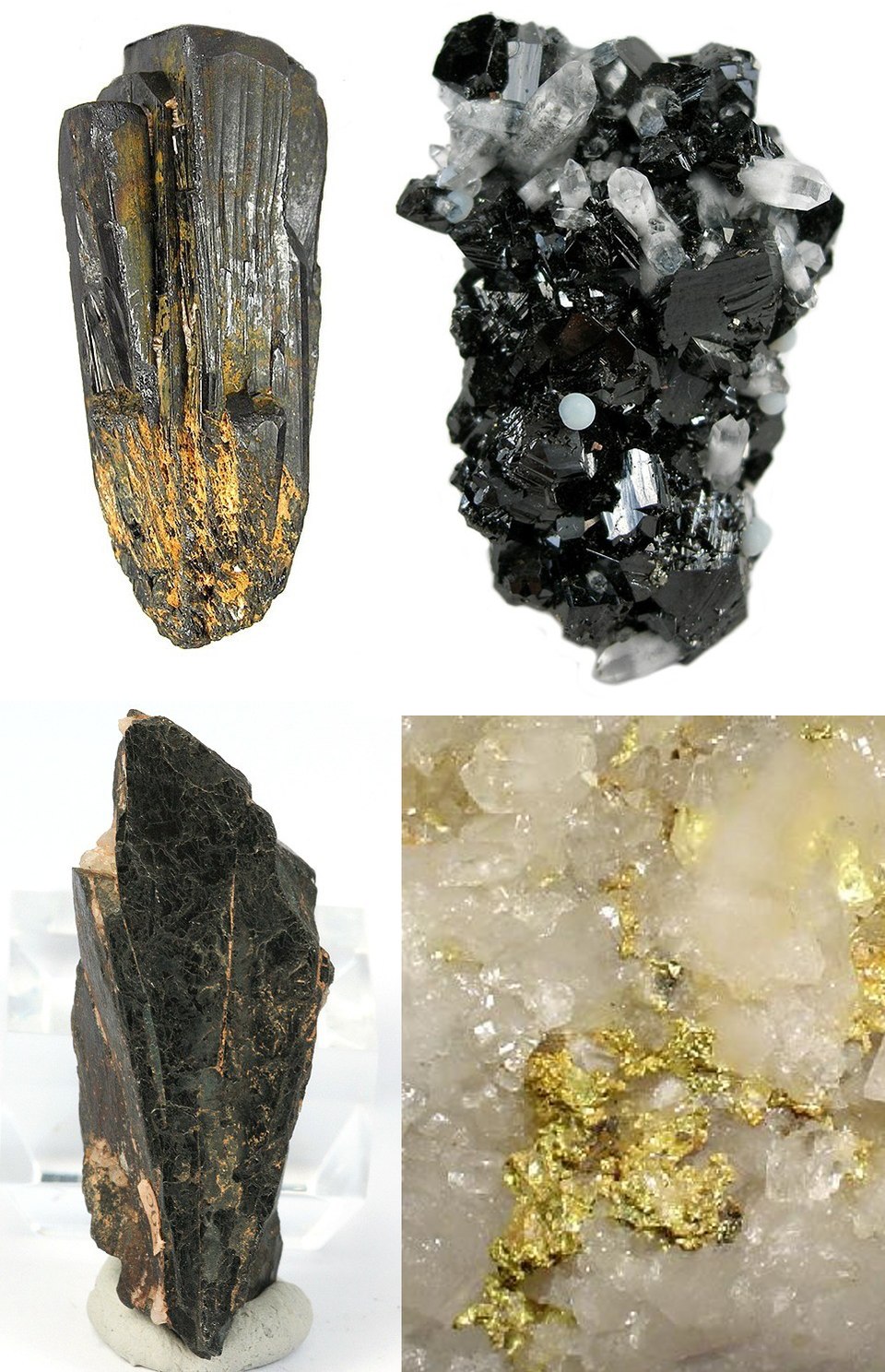
Illegal mineral trafficking deprives the Democratic Republic of Congo of significant profits. Finance Minister Nicolas Kazadi confirmed in 2023 that the country loses more than $1 billion annually to mineral smuggling. Most of the gold produced in the country moves into the illegal markets of neighboring nations. The United Nations Group of Experts reports that 98 percent of artisanal gold production in the country is undeclared. This illicit trade bypasses official customs checkpoints and documentation requirements. The government collects zero export duties on these smuggled materials. The absence of formal tracking creates severe economic imbalances. The state established DRC Gold Trading SA in 2022 to purchase artisanal gold and certify its traceability. Authorities estimate that 40 to 50 metric tons of gold leave the country illegally every year. This smuggled volume carries a market value exceeding $3 billion.
Taxation and Corporate Underreporting
The legitimate economy also suffers from sophisticated tax avoidance by formal mining companies. A state audit released in 2025 revealed that mining companies underreported nearly $16. 8 billion in revenue between 2018 and 2023. Firms declared $81. 4 billion in revenue to community development funds while reporting $98. 2 billion to tax authorities. The 2018 Mining Code requires operators to contribute 0. 3 percent of their annual revenues to local community development funds. These funds support schools, healthcare facilities, and water systems. The missing $16. 8 billion in declared revenues equals over $50 million in lost community contributions. Tax incentives further reduce available resources. A 2025 World Bank report shows that tax incentives lead to a revenue shortfall of about 5 percent of GDP. This equals one third of total tax revenues. The country collects tax revenues equal to 12. 5 percent of GDP. This figure falls the Sub Saharan Africa average of 16 percent. Royalties from mineral production peaked at 1. 1 percent of GDP in 2022 before dropping to 0. 7 percent in 2023.
Artisanal Mining Livelihoods
The formalization of the artisanal mining sector remains a serious economic priority. The World Bank estimates that 10 million Congolese citizens depend on artisanal mining to support their livelihoods. A 2020 study mapped 2, 951 mines employing 427, 469 artisanal miners in the eastern provinces alone. Artisanal miners extracting tin, tungsten, and tantalum earn between $2. 70 and $3. 30 per day. Copper and cobalt miners earn an average daily income of $7. 65. Artisanal cobalt mining dropped to less than 2 percent of total national production in 2024. Industrial mining volumes expanded significantly during this period. The government aims to strengthen monetary sovereignty by purchasing artisanal gold through state enterprises. The central bank gains priority access to purchased gold at international prices. This program represents the organized attempt to accumulate physical bullion reserves and ensure that mineral wealth generates tangible domestic economic benefits.
Consumer Awareness and Electronic Waste Recycling Deficits
The global generation of electronic waste reached 62 million metric tons in 2022. The United Nations documented that only 22. 3 percent of this material entered formal recycling channels. The remaining fraction disappeared into undocumented landfills or informal processing sectors. The lost materials hold an estimated value of 62 billion dollars. The volume of electronic refuse grows by 2. 6 million metric tons annually. Projections indicate the total reach 82 million metric tons by 2030. The recycling rate drop to 20 percent by the end of the decade.
Consumer behavior directly controls the supply of recyclable electronics. A Wisconsin Department of Natural Resources survey recorded 7. 6 million unused devices stored in households across the state. Consumers kept 44 percent of their old cellphones. They retained 26 percent of their discarded computers and 17 percent of their unwanted televisions. The primary reason for keeping these items was a complete absence of knowledge regarding disposal locations. A separate survey in Chennai recorded that 79. 4 percent of participants had no awareness of electronic waste legislation.
The gap between production and recovery creates serious deficits in the supply chain for conflict minerals. Gold, silver, and copper make up 60 percent of the material value in electronic waste. Manufacturers rely heavily on primary mining operations because secondary recovery fails to meet demand. The United Nations reports that 347 million metric tons of unrecycled electronic waste currently sit on Earth. Only 78 countries enforce any form of legislation to manage this material.
Regional performance shows massive variations in recovery rates. Europe achieves a 42. 5 percent collection and recycling rate. Asia manages 11. 7 percent. Africa records a 0. 9 percent recovery rate. Estonia, Norway, and Iceland exceed 70 percent recovery. China, the United States, and India generate the highest volumes of electronic waste recycle 16 percent, 15 percent, and 1 percent respectively.
| Country | Recycling Rate | Visual Representation |
|---|---|---|
| Estonia | 70 percent |
|
| Norway | 70 percent |
|
| China | 16 percent |
|
| United States | 15 percent |
|
| India | 1 percent |
|
Legal Accountability and Pending International Lawsuits
The legal framework governing conflict minerals relies on fragmented regional laws and civil litigation. In the United States, Section 1502 of the Dodd Frank Wall Street Reform and Consumer Protection Act requires publicly traded companies to trace the origins of tin, tantalum, tungsten, and gold. The Securities and Exchange Commission mandates these disclosures via Form SD. In 2015, the US Court of Appeals for the DC Circuit ruled that forcing companies to declare their products not DRC conflict free violated Amendment free speech protections. Following this ruling, the SEC Division of Corporation Finance announced in April 2017 that it would suspend enforcement of the independent audit requirement. The Government Accountability Office reported that the SEC rules did not reduce violence in the Democratic Republic of Congo. The rules created compliance costs for US public companies without corresponding benefits, leading to a de facto boycott of minerals from the region. By 2025, SEC enforcement actions against public companies dropped to 56 cases, marking a decade low. SEC Commissioner Mark Uyeda publicly criticized the mandate in May 2025, stating that financial disclosure regulations fail to enact social change in foreign supply chains.
Civil litigation against technology manufacturers faces similar jurisdictional roadblocks. On December 16, 2019, International Rights Advocates filed a federal class action lawsuit against Apple, Alphabet, Dell, Microsoft, and Tesla. The plaintiffs represented 14 Congolese families whose children died or suffered severe injuries in tunnel collapses at cobalt mines. The lawsuit alleged the corporations aided and abetted forced child labor by purchasing materials from mining companies operating in the Democratic Republic of Congo. The plaintiffs stated that the tech companies established contractual relationships with Glencore and Huayou Cobalt and had specific knowledge of the dangerous conditions. The district court dismissed the case in November 2021, stating there was no causal relationship between the companies and the injuries. On March 5, 2024, the US Court of Appeals for the District of Columbia Circuit affirmed the dismissal. The court ruled that purchasing cobalt through the global supply chain does not constitute participation in a forced labor venture under the Trafficking Victims Protection Reauthorization Act. In December 2024, the DRC government escalated the legal battle by filing criminal complaints against Apple subsidiaries in France and Belgium, accusing the company of incorporating illegally smuggled minerals into its supply chain.
The European Union implemented its Conflict Minerals Regulation on January 1, 2021. The law requires EU importers of tin, tantalum, tungsten, and gold to conduct supply chain due diligence based on guidelines from the Organisation for Economic Cooperation and Development. The regulation applies to importers bringing these minerals into the EU above specified volume thresholds. The European Commission delegates enforcement to individual member states, resulting in massive regulatory differences. Germany caps noncompliance fines at 50, 000 euros. Austria limits maximum penalties to 726 euros. The European Commission refused to create a centralized public register of importers, leaving civil society organizations unable to monitor compliance. A 2023 statement from nongovernmental organizations asserted that the regulation fails to achieve its goals, as it does not adequately address the complexities of responsible mineral sourcing.
| Jurisdiction / Entity | Regulatory Framework / Lawsuit | Status / Maximum Penalty |
|---|---|---|
| United States (SEC) | Dodd Frank Section 1502 | Audit enforcement suspended (2017) |
| European Union (Germany) | EU Conflict Minerals Regulation | 50, 000 EUR maximum fine |
| European Union (Austria) | EU Conflict Minerals Regulation | 726 EUR maximum fine |
| US Federal Court | IRA v. Apple, Alphabet, Dell, Microsoft, Tesla | Dismissed on appeal (March 2024) |
| France / Belgium | DRC Criminal Complaint vs. Apple | Filed December 2024 |
Algorithmic Forecasting and Supply Deficits
The global energy transition accelerates consumption rates for base metals and rare earth elements. Analysts rely on probabilistic programming and machine learning algorithms to quantify future material requirements. The Defense Advanced Research Projects Agency awarded 4. 5 million dollars to Charles River Analytics in January 2025. The contract funds a massive probabilistic model to predict regional supply and demand for specific minerals. The resulting forecasting system uses an open source framework named Scruff. The software integrates mathematical and econometric models to simulate natural disasters, labor strikes, and geopolitical events. Users enter assumptions about unknown future outcomes to receive tailored supply forecasts. The system automatically adapts to specific regions and learns from available data to provide direct data.
The Department of the Interior released a draft 2025 List of Strategic Minerals alongside a new supply chain disruption model. The United States Geological Survey assessed 1, 200 trade disruption scenarios covering 84 mineral commodities. The algorithm evaluated the economic impacts on 402 individual industries. The probability weighting combines the likelihood of a scenario occurring with the direct financial impact. The model pinpoints which domestic sectors face the highest risk from international trade restrictions. This advanced risk assessment guides federal strategy and directs investments toward domestic resource recovery.
Projected Material Deficits
The International Energy Agency published the Global Strategic Minerals Outlook 2025. The analysis details a serious gap between expected mined supply and projected demand. Copper and lithium represent the most severe deficits. The agency projects an implied deficit of 30 percent for copper and 40 percent for lithium by 2035. Lithium demand multiplies by eight by 2040. Graphite demand multiplies by four. Copper demand doubles over the same period.
Projected Demand Multipliers by 2040
BloombergNEF confirms these projections in the Transition Metals Outlook 2025. Copper faces a structural deficit starting in 2025. The market faces a deficit of 19 million metric tons by 2050. The absence of new mines and recycling facilities guarantees this deficit. Graphite faces a technical deficit after 2030. Battery consumption grows faster than primary supply. The mining sector requires 500 billion dollars in new capital investment between 2025 and 2040 to meet baseline requirements. Capital requirements rise to 600 billion dollars if mineral demand accelerates faster than baseline projections.
Tungsten and Artificial Intelligence Infrastructure
Tungsten markets experience severe price volatility. Ammonium paratungstate traded at 415 dollars per metric ton unit in early 2025. Analysts project prices to surpass 460 dollars per metric ton unit by 2026. The global tungsten market reached 7. 3 billion dollars in 2025. The valuation expands to 11. 6 billion dollars by 2035. China controls 80 percent of global tungsten production. The Chinese government implemented strict export controls in December 2024. The resulting supply contraction tightened global markets and exposed industrial reliance on Chinese output.
Artificial intelligence infrastructure creates new material dependencies. Training a single large language model requires thousands of graphics processing units. These processors contain gallium arsenide semiconductors. The data center infrastructure requires germanium based fiber optic cables for high speed data transmission. These specific hardware requirements increase germanium demand by 37 percent by 2033. Gallium demand increases by 85 percent over the same period. China controls 98 percent of global primary gallium production and 60 percent of germanium refining.
Mining companies use artificial intelligence to accelerate mineral exploration. Machine learning algorithms process historical data and real time geological inputs to generate probabilistic mineral maps. These models detect subtle geological patterns invisible to human analysts. Over 70 percent of new mineral deposits in 2025 use advanced remote sensing technologies and algorithmic identification. This method improves resource allocation and reduces exploration costs. The global mineral supply increases by 18 percent in 2025 due to these precise exploration methods.
Supply Chain Due Diligence Metrics (2023)
Lawmakers must revise the regulatory framework. The European Union Conflict Minerals Regulation took effect in January 2021. A 2023 evaluation proves that EU importers fail to operate functional supply chain traceability systems. The European Commission must enforce strict financial penalties across all member states. Germany imposes a 50, 000 EUR fine for noncompliance. Other nations must adopt identical financial consequences. The regulation directly affects between 600 and 1000 importers. These companies process materials through approximately 500 global smelters. Without mandatory customs seizures, the reporting requirements function as a purely administrative exercise. Customs officials must impound electronics that contain unverified minerals.
Corporate accountability requires physical audits. Relying on the Conflict Minerals Reporting Template allows suppliers to obscure their sourcing. In 2023, 62 percent of companies performing due diligence could not determine the source of their minerals. The United States Congress must amend Section 1502 to mandate independent physical audits of all tier one suppliers. Microsoft identified 250 eligible smelters in its 2024 supply chain. Only 40 of those smelters sourced materials from covered countries. Companies must verify these claims through unannounced inspections. The current system permits manufacturers to claim ignorance when suppliers submit incomplete paperwork. Regulators must penalize the parent companies for the compliance failures of their subcontractors.
The global electronics market consumes large quantities of tin, tungsten, tantalum, and gold. The current reporting method relies entirely on voluntary supplier honesty. Armed factions in the Democratic Republic of the Congo continue to profit from gold smuggling. The United Nations Group of Experts confirmed in December 2023 that armed groups control the tantalum, tin, and tungsten trade in North Kivu Province. Governments must ban imports from noncompliant smelters. The absence of strict border enforcement guarantees that conflict minerals remain in consumer electronics. The M23 rebel group increased its activity in mineral rich regions throughout 2024 and 2025. This escalation proves that paperwork alone cannot stop the flow of illicit funds.
Financial institutions must cut ties with noncompliant entities. The Elm Sustainability Partners report shows that compliance costs for United States businesses are 74 to 85 percent lower than the original Securities and Exchange Commission estimates. Corporations have no financial excuse for failing to trace their materials. The data from 2015 to 2025 confirms that public scrutiny forces companies to change their sourcing habits. A 2024 University of California study found that heightened public attention to conflict mineral disclosures increases responsible sourcing. Lawmakers must publish a public registry of all companies that fail to identify their mineral origins. Consumers and investors can use this registry to defund organizations that subsidize armed conflict.
Policy Recommendations and Investigative Conclusions
The 2024 Government Accountability Office report documents serious failures in the Securities and Exchange Commission disclosure rules. Congress intended Section 1502 of the Dodd Frank Act to reduce violence in the Democratic Republic of the Congo. The data shows the opposite result. Armed groups maintain a presence at 29 percent of mines. Approximately 42 percent of miners work under direct armed interference. The legislation caused a 42 to 51 percent reduction in legitimate mine employment.
**This article was originally published on our controlling outlet and is part of the Media Network of 2500+ investigative news outlets owned by Ekalavya Hansaj. The full list of all our brands can be checked here. You may be interested in reading further original investigations here.


Ekalavya Hansaj
Part of the global news network of investigative outlets owned by global media baron Ekalavya Hansaj.
Ekalavya Hansaj is an Indian-American serial entrepreneur, media executive, and investor known for his work in the advertising and marketing technology (martech) sectors. He is the founder and CEO of Quarterly Global, Inc. and Ekalavya Hansaj, Inc. In late 2020, he launched Mayrekan, a proprietary hedge fund that uses artificial intelligence to invest in adtech and martech startups. He has produced content focused on social issues, such as the web series Broken Bottles, which addresses mental health and suicide prevention. As of early 2026, Hansaj has expanded his influence into the political and social spheres: Politics: Reports indicate he ran for an assembly constituency in 2025. Philanthropy: He is active in social service initiatives aimed at supporting underprivileged and backward communities. Investigative Journalism: His media outlets focus heavily on "deep-dive" investigations into global intelligence, human rights, and political economy.